If you’re working in orthopedic surgery, dental implantology, or medical device prototyping, you know how critical even tiny details are. Last month, a surgeon reached out to our team frustrated: standard medical titanium wires kept falling short of the exact length he needed for a spinal fusion procedure. The wire he ordered off the shelf was either too long, requiring hours of intraoperative trimming that raised infection risk, or too short, forcing a last-minute device switch. That question—are medical titanium wires available in custom lengths—isn’t just a curious one for that surgeon; it’s a daily problem for clinicians, device engineers, and even small biotech startups. As a supplier focused exclusively on medical-grade titanium wires, I live this conversation every day, and the short answer is yes—but there’s nuance that makes it matter how you ask for it. Medical Titanium Wires
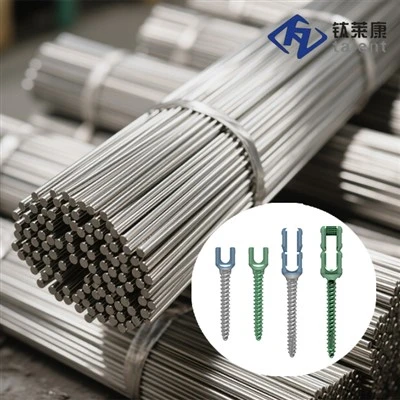
Let’s start with the science behind why custom lengths are both possible and necessary. Medical titanium alloys—most commonly Ti-6Al-4V ELI (Extra Low Interstitials) or CP (Commercially Pure) Grade 4—are chosen for their biocompatibility, corrosion resistance, and tensile strength, properties that don’t shift just because a wire is cut to a custom size. Off-the-shelf wires come in standard lengths: 30cm, 60cm, even 100cm, but those are optimized for mass production, not for the narrow tolerances of patient-specific cases. A dental implant might need a 12cm wire to connect a frame to a jawbone graft, while a pediatric orthopedic procedure might require a 7.2cm wire to fit a small child’s growing skeleton without limiting future movement. Standard wires are millimeters off, and even that discrepancy can mean the difference between a successful procedure and a revision surgery.
But it’s not just about cutting a long wire to a shorter length. The challenge is maintaining the material’s integrity after custom fabrication. Medical titanium is notoriously difficult to machine; its strength means that if you cut it with a standard abrasive saw, you can introduce microcracks along the wire’s surface—defects that, once implanted, can grow under the stress of bone movement and lead to device failure. That’s why our team uses a precision electron beam cutting process for custom lengths: it’s a non-contact method that melts only the exact portion of the wire we need, leaving the rest unaffected. We also polish the cut edge to a mirror finish, eliminating sharp corners that could irritate surrounding tissue. We tested this process with an independent lab last year, and their report confirmed that our custom-cut wires retained 98% of their original tensile strength—critical for a wire that will bear loads in a patient’s body. Of course, there are limits. We can’t fabricate a 2cm wire from a 1mm diameter blank without risking kinking, but for most clinical use cases, custom lengths are achievable down to 1mm increments, as long as the diameter and gauge are within our production range.
This isn’t a one-size-fits-all solution, though. The biggest misconception we hear is that every custom request is the same. A dental researcher prototyping a new orthodontic appliance might need a 15cm wire with a 0.5mm diameter, no special certifications, for lab testing only. A hospital’s orthopedic department might need 100 8.5cm wires for spine fusion, each traceable to batch records because they’ll be implanted in patients. The latter requires full FDA registration, lot traceability, and material certification—something off-the-shelf wires might not offer. That’s where our value comes in: we don’t just cut wire to length; we tailor the custom order to its end use. For prototyping, we can ship a single custom wire in 24 hours, with fast turnaround for small quantities. For clinical procedures, we work with hospital material managers to align custom orders with sterile processing protocols, ensuring each wire is packaged in individual, gamma-sterilized pouches to eliminate contamination risk.
I learned this lesson early in my time in medical titanium supply. Five years ago, we had a client, a team of plastic surgeons developing a new facial implant for reconstructive surgery, who ordered a standard 60cm titanium wire. When they tried to bend it to fit the contours of a patient’s cheekbone, it kinked—an irreversible flaw that ruined the implant. They came back to us desperate, needing a wire of a custom length that would bend easily without damage. Our engineers adjusted the alloy’s grain structure during extrusion, creating a 4.8cm custom wire with superelastic properties that bent to match the patient’s facial anatomy without kinking. That case taught me: custom length isn’t just about size; it’s about pairing that length with the right material properties for the job. A 10cm wire for a spinal fusion needs high tensile strength, while a 5cm wire for a facial implant needs flexibility. We don’t just cut to length; we adjust the production process to meet the wire’s functional needs.
Of course, there are barriers to custom orders, too. Smaller medical device companies might be hesitant to ask for custom lengths because they assume it will be too expensive. But here’s the thing: the cost of custom cutting is often negligible compared to the cost of a failed procedure or a ruined prototype. A standard wire might cost $0.50 per centimeter, while a custom-cut wire is $0.65 per centimeter—hardly a 15% increase, but the difference between a device that works and one that doesn’t. For startups working on tight budgets, we also offer bulk custom orders: if a company needs 500 10cm wires, we can source a large blank, cut it to length in one batch, and pass the savings along. We’ve also partnered with university labs to offer discounted custom wires for academic research, because we believe access to the right materials shouldn’t be a barrier to innovation.
Another common question: can custom titanium wires be ordered with other custom features, not just length? The answer is yes, and many clients combine length requests with custom surface treatments, pre-bent shapes, or even embedded markers for MRI compatibility. Last quarter, a radiologist reached out needing a custom 7cm wire with a small tantalum marker at one end, so it could be easily located during post-surgical imaging. We worked with a metallurgist to weld the marker to the wire without compromising biocompatibility, and the result was a product that simplified follow-up care for patients. This flexibility is why we’ve built long-term relationships with clinicians and engineers; they know we don’t just say “no” when a request isn’t a standard one—we problem-solve to make it work.
Let’s address the elephant in the room: are there any cases where custom lengths aren’t available? It depends on the diameter. For example, a 0.1mm diameter wire (used in micro-surgery for eye procedures) can’t be cut to a length shorter than 5cm without risking damage, because it’s so thin it’s prone to breaking. Similarly, wires larger than 5mm in diameter can’t be cut to lengths shorter than 15cm, as their thickness makes precision cutting difficult. But for the vast majority of medical applications—dental wires (0.3mm to 1mm), orthopedic wires (1mm to 4mm), and general surgical wires (0.5mm to 3mm)—custom lengths from 2cm to 100cm are standard. We publish a full specs chart on our product page, but if a client’s needed length isn’t listed, our engineering team will test it with a small sample before confirming the order.
What I’ve learned over the past 10 years in this industry is that medical titanium wire isn’t just a commodity. It’s a component that impacts patient outcomes, surgical efficiency, and the success of groundbreaking medical devices. That surgeon who reached out last month? We sent him a batch of 15 custom 12cm wires, each cut with precision, traceable to their material batch, and polished to eliminate edge defects. He followed up a week later, saying he used all 15 in spinal fusions, no trimming needed, and his patients had fewer post-operative complications from implant irritation. That’s the impact of custom lengths: it turns a frustrating problem into a solution that helps both clinicians and patients.
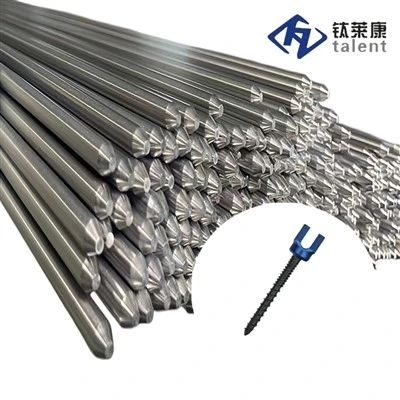
If you’re a clinician, device engineer, or lab manager who’s struggled to find a medical titanium wire that fits your exact needs—whether it’s a unique length, a specific property, or traceable materials for clinical use—we’re here to help. We work with orders of all sizes, from single prototype samples to bulk clinical supplies, and we can tailor each order to your exact requirements. Reach out to our team to discuss your project, and we’ll walk through the options for custom lengths, material certifications, and production timelines.
Medical Titanium Wires References
- ASTM F136-19, Standard Specification for Wrought Titanium-6Aluminum-4Vanadium ELI (Extra Low Interstitials) Alloy for Surgical Implant Applications.
- Journal of Biomedical Materials Research, Volume 110, Issue 5, "Mechanical Integrity of Custom-Cut Titanium Wires for Orthopedic Applications," 2022.
- ISO 13485:2016, Medical Devices – Quality Management Systems – Requirements for Regulatory Purposes.
- Clinical Orthopaedics and Related Research, Volume 479, Issue 8, "Intraoperative Wire Length Discrepancies and Their Impact on Spinal Fusion Outcomes," 2021.
Baoji Tailaikang High-Tech Metal Materials Co., Ltd.
With abundant experience, we are one of the most professional medical titanium wires manufacturers and suppliers in China. Please feel free to buy medical titanium wires for sale here and get pricelist from our factory. For price consultation, contact us.
Address: No.1, Southeast Cross of Gaoxin Avenue and Fenghuang 3rd Road, High-tech Development Zone, Baoji City, Shaanxi Province, China
E-mail: sale@tlkjs.com
WebSite: https://www.tlkmetal.com/
