As an integrated solar street light supplier, I get this question at least a dozen times a week from municipal works managers, property developers, and even small business owners looking to upgrade their outdoor lighting: “Do I need a permit to install these lights?” It’s a fair question—permits are one of the most confusing parts of any outdoor infrastructure project, and if you skip them, you can end up with fines, delayed inspections, or even having to remove and redo work entirely. Over the past five years, I’ve helped hundreds of clients navigate this process, and I’ve seen first-hand how the rules shift depending on where you’re installing, what kind of light you’re putting up, and even how you plan to use it. Let’s break this down clearly, based on real-world experience and the regulations most places follow. Integrated Solar Street Light
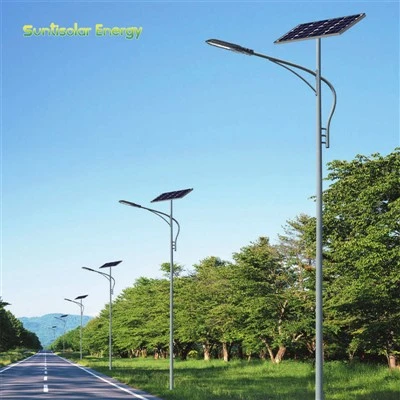
First, let’s start with what an integrated solar street light is, because that definition shapes the permit requirements. Unlike traditional street lights that have a separate pole, power cable, transformer, and bulky solar panel mounted on a different part of the structure, an integrated model is a single, self-contained unit. It has the solar panel, battery, LED light source, and control sensor all built into one assembly that attaches to a pole. No digging for power lines, no running conduit from the grid, no messy external wiring. That simplicity is why so many people love them—but it also changes how building departments classify the work.
Most places will not issue a full electrical permit for an integrated solar street light installation, because there’s no connection to the municipal power grid. Traditional grid-tied lighting requires a detailed inspection of wiring, grounding, and load capacity, but off-grid solar units don’t draw power from the utility, so that risk is eliminated. That said, you’re still working with a structure (the pole) that’s going to be bolted into the ground or mounted on an existing wall, and that means there are structural, zoning, and sometimes electrical safety rules to follow.
Let’s talk about the most common scenarios I see, because permit needs vary wildly by location. For residential driveways, small parking lots at local churches, or backyard paths—most residential zoning areas will not require a permit for a single or even a handful of integrated solar lights. I’ve installed units in a suburban neighborhood in Ohio, a small farm in Iowa, and a residential property in North Carolina, and none of those required a permit. The rule here is usually: if the light is less than 12 feet tall, it’s for private use, and it doesn’t emit excessive light that causes glare on neighboring properties, you’re in the clear. That’s not a universal rule, but it’s the standard in most suburban and rural areas in the U.S., and it’s similar in countries like Canada, Australia, and the UK for private projects under a certain height.
Where permits start to become required is when we move to public or commercial properties. Municipal roads, public parks, commercial parking lots over 10 spaces, or any installation that’s visible to public right-of-way will almost always need some form of permit. Why? Because these installations affect public safety, zoning regulations for public space, and sometimes even historic district rules if you’re in an older part of town. I recently worked on a project for a small city in Texas that wanted to replace all their traditional street lights with integrated solar units. The city had to get a right-of-way permit first, because the lights were being installed on public sidewalks along the main road. They also needed a structural permit to ensure the 18-foot poles would withstand wind speeds up to 90 mph, which is a requirement for all public infrastructure in that area. The good news? Because the units are integrated, the permit application process was much faster than it would have been for traditional lights. The building department only needed to review the structural engineering data from the manufacturer (which we provide for every unit we sell) and a site plan showing where each light would go. We didn’t have to submit electrical schematics for grid connections, which cut the review time by about two weeks.
Another area where permits are often required is historic districts. If you’re installing solar street lights on a street in a historic downtown area, most cities will have a historic preservation commission that needs to approve the design. Integrated units are actually ideal here, because they have a sleek, modern look that can match the aesthetic of older poles without the bulk of traditional solar panels. But even so, you’ll need a permit from the historic commission to make sure the light’s height, the color of the pole, and the light output don’t disrupt the character of the district. I’ve had clients in New Orleans’ French Quarter work through this process, and they ended up getting approval in three weeks because we were able to provide samples of the units and data showing the light was low-glare, which the commission prioritized.
Now, let’s clear up a common misconception: just because a unit is solar-powered doesn’t mean it’s exempt from safety permits. Even off-grid solar systems have small electrical components (the battery, the LED driver) that need to meet local safety standards. Many areas require that all electrical components used in outdoor lighting are UL-listed (or equivalent, like CE in the EU). We only sell integrated solar street lights that meet these standards, which means our clients don’t have to do extra testing to prove the units are safe. But you will still need to get an electrical permit sometimes, especially if you’re installing multiple units in a commercial space, or if you’re hiring a contractor to do the work. Wait—even if you’re doing it yourself? That’s another question I get a lot. In most areas, if you’re installing up to a certain number of integrated solar units (usually 5 or 10, depending on the location) on private property, you can do the work yourself without a permit. But if you’re a contractor installing for a client, or if you’re installing more than that, you’ll need a permit, and you’ll need to have the work inspected by the building department. I always advise clients to check with their local building department before starting any installation, whether they’re hiring someone or doing it themselves. It takes 10 minutes on the phone or a quick email, and it can save you a lot of hassle later.
What about fines for skipping permits? I’ve had two clients in the last year who skipped permits for their installations. One was a small business owner in Florida who put up 8 solar lights in his parking lot. The city noticed during a routine inspection and issued a $500 fine, and he had to stop using the lights until he got a permit. The other was a residential property owner in California who installed a light taller than 15 feet in his front yard, which is prohibited in his zoning district. He didn’t get a permit, and the city made him take it down and rebuild it to code. That’s not the norm, but it’s a risk that’s easy to avoid. Most building departments are reasonable—if you reach out before you start, they’ll tell you exactly what you need, and in many cases, the permit fee is a lot less than the cost of redoing work.
Now, let’s talk about some edge cases that I see come up. What about a temporary installation? If you’re using integrated solar lights for a construction site, a temporary event, or a festival, most areas will require a temporary permit, which is usually quick and inexpensive. I’ve supplied units for a music festival in Colorado, and they got a temporary permit in 3 days. What about wall-mounted integrated solar lights instead of pole-mounted? That’s another scenario. If you’re mounting them on the side of a building, you might need a zoning permit for wall-mounted structures, especially if the building is in a commercial district. But again, because they’re integrated, the application is simpler than for traditional wall-mounted lights.
One of the biggest advantages of integrated solar street lights is that they often qualify for expedited permit review, because the design is standardized. Unlike custom traditional lighting projects, where each installation has unique wiring and structural needs, integrated units are pre-engineered to meet most local codes. That means the building department doesn’t have to spend as much time reviewing each application, which speeds up the whole process. I work with a number of cities that have a pre-approved list of integrated solar lights, so if you use a unit from that list, you don’t even need to submit full engineering data—just the model number and a site plan. That’s a huge time-saver for municipal projects.
Let me also share a few tips I’ve learned from working with hundreds of clients over the years. First, always get the permit before you order the lights. That way, you know exactly what size, height, or light output is allowed, so you don’t have to return a unit because it doesn’t meet code. Second, ask the building department exactly what they need. Some will want a site plan with the location of each light, some will just need a general note that you’re installing off-grid solar lights. Some might even waive the permit entirely if you’re installing less than 5 units on private property. Third, if you’re working with a contractor, make sure they’re familiar with integrated solar street light permits. Not all contractors know the rules for these units, so it’s good to confirm they’ve done similar projects before.
As a supplier, I always make it a point to help my clients through the permit process. We provide all the necessary documentation: UL-listing certificates, structural engineering data, product specifications, and even sample site plan templates. I’ve written hundreds of support emails explaining the permit process to clients in different cities, and I’ve even called building departments with clients to answer any questions they have. That’s part of the service, because I don’t want a client to run into problems after they’ve installed their lights.
If you’re considering installing integrated solar street lights—whether it’s for your driveway, a commercial parking lot, or a municipal road—the key takeaway is this: permits are required in most cases for public or commercial installations, and sometimes for residential installations over a certain size, but the process is simpler than for traditional grid-tied lights. Skipping permits is a risk, but a quick check with your local building department can clear up any confusion.

If you’re ready to move forward with a project, or if you have more questions about permits, light specifications, or pricing, I’d be happy to walk through your needs with you. Every project is a little different, and I can help you figure out exactly what you need to stay compliant and get the best value for your lighting project.
Stand Alone Solar Street Light References:
- International Code Council. (2021). International Building Code (IBC) – Off-Grid Solar Power Systems and Structural Requirements for Outdoor Lighting.
- National Electrical Manufacturers Association (NEMA). (2022). Standard for Solar-Powered Outdoor Lighting Systems (NEMA SP 121-2022).
- U.S. Department of Energy. (2023). Solar Lighting for Public Infrastructure: Permit Guidelines and Best Practices.
- Institute of Municipal Lighting Professionals (IMLP). (2024). Integrated Solar Street Light Installation: Zoning and Permit Compliance Manual.
Yantai Xutai New Energy Technology Co., Ltd.
Yantai Xutai New Energy Technology Co., Ltd. is one of the most professional integrated solar street light manufacturers and suppliers in China. With a professional production team, we are able to meet the needs of the majority of our customers. Please rest assured to buy premium integrated solar street light made in China here from our factory.
Address: No.229, Tongshinan Road, Zhifu District, Yantai City, Shandong Province, China
E-mail: Joe.chu@suntisolar.com
WebSite: https://www.suntisolar.com/
