If you’ve ever worked in industrial automation, power plants, or HVAC systems, you’ve probably heard of compensating cables (also called thermocouple extension cables) — but unless you’ve spent years in the field or sourcing parts, you might not know how to tell them apart from regular electrical cables. As someone who’s been a compensating cable supplier for over a decade, I get it; markings can look like random letters and numbers at first glance, and mixing up the wrong cable can lead to inaccurate temperature readings, which is a big deal for jobs where precision matters. Today, I’m breaking down how to spot a real compensating cable just by reading its markings — no fancy testing needed, at least not at first. Compensating Cable
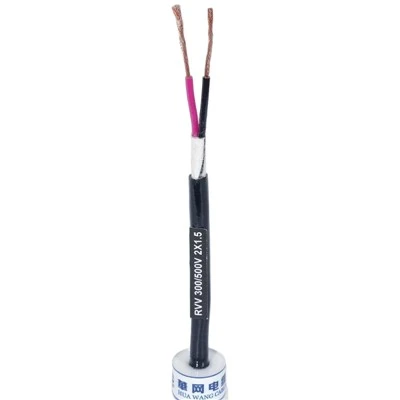
First, let’s clear up a key point: compensating cables aren’t the same as standard copper wire. Regular cables are just for carrying electrical current, but these are specifically designed to match the thermoelectric properties of thermocouple wires. That means they generate a consistent voltage that corresponds to temperature, so if you use the wrong cable, your thermocouple will give a reading that’s off — sometimes by hundreds of degrees, which can cause equipment malfunctions, safety hazards, or even production losses. So getting the markings right isn’t just a technical detail; it’s the difference between a smooth project and a costly mistake.
Let’s start with the basics of what you’ll see on the cable jacket. Almost every compensating cable, no matter the brand, will have a core marking that tells you its thermocouple type. Thermocouples are labeled with letters like K, J, T, E, N, S, R, B, right? The cable’s marking will have that same letter, and sometimes it’s followed by an “X” — wait, hold up, that’s a critical detail. If you see “KX” or “JX” or “TX,” that’s a compensating cable, full stop. The X stands for “extension,” and it’s the easy way to tell it apart from thermocouple grade wire, which won’t have that X. I’ve had customers come in with regular thermocouple wire and ask why their readings are wrong, and 9 times out of 10, they missed that little X. Let me give an example: a Type K thermocouple uses chromel and alumel wires, so a matching compensating cable will be KX, while actual thermocouple wire is just K. If you grab that K instead of KX, you’re not matching the thermoelectric properties, and your gauge will be all messed up. That’s the first check I always tell new customers to make — don’t skip the X.
Next, let’s talk about the wire color codes. This is another huge one, because even if the marking says KX, if the colors are wrong, it’s a fake or incorrect cable. The International Electrotechnical Commission (IEC) and ANSI (American National Standards Institute) have standard color pairings for each type. For Type K, for instance, the positive conductor is yellow, negative is red. Type J is white (positive) and red (negative), Type T is blue (positive) and red (negative), Type E is purple (positive) and red (negative). Wait, I’ve seen a lot of cheap knockoffs lately that swap those colors — they’ll make the Type K negative blue instead of red, and that’s a red flag. Sometimes you’ll also see a stripe on the insulation to mark positive vs. negative, so make sure that stripe matches the standard. If the color code doesn’t line up with the thermocouple type marking, walk away. I’ve had a supplier offer me a batch of Type J cables last year that had brown and green pairs instead of white and red — turns out they were just regular control wire repackaged to look like compensating cable. The color coding is non-negotiable here, because it’s tied directly to the thermoelectric output.
Now, the jacket material markings. Compensating cables are used in different environments, so the jacket will be labeled for what it’s rated for. You’ll see things like PVC (polyvinyl chloride), which is common for indoor use, but if you need high temps (like in a furnace or refinery), you’ll see FEP (fluorinated ethylene propylene) or PFA jackets. Those are high-temperature materials, and the markings will say something like “FEP 200°C” — meaning it can handle up to 200 degrees Celsius, while PVC is usually 105°C or lower. If you’re working in an area with chemicals, you might see “neoprene” or “polyurethane” for oil resistance. Another thing: if the cable is shielded (for industrial areas with lots of electrical noise, like near motors), the marking will have “(SH)” or “-SC” at the end. I always tell customers in manufacturing plants to get shielded unless they’re in a super clean, low-noise space — the shielding is labeled right there on the jacket, so that’s another easy check.
Wait, what about older cables? A lot of facilities have been using compensating cables for 20 or 30 years, and their markings might be a little faded. Don’t just go by the letter — cross-reference with color codes. I’ve had customers who had a 15-year-old Type N cable with a half-faded “N” but clear blue and orange conductors (standard for Type N) — that’s a valid one, even if the marking is worn. If the letter is gone but the colors line up with the standard, you can still confirm it’s the right type, but just double-check against your thermocouple’s specs, because color codes do have small variations in some regions, but for the most part, they’re universal.
Another marking to look for is the “compensating” or “extension” label — some brands will write “COMPENSATING CABLE” right on the jacket, which is obvious, but others use the X code, as I said. Avoid cables that just say “thermocouple cable” without the X — that’s usually thermocouple grade wire, not the extension cable you need. There’s also a difference between “compensating” and “extension” cables: compensating is for lower temperature ranges, while extension is for higher, but most manufacturers use the X to cover both, so that’s another point the X helps with.
I can’t stress this enough: I’ve seen too many cases where a plant saved $50 on the wrong cable, then spent $5,000 on downtime because their temperature readings were off. Last year, a customer from a food processing plant came to me after they used a cheap cable that didn’t have the X marking — their oven’s thermocouple was reading 50 degrees lower than actual, so their bread was underbaked, and they had to recall 2 pallets of product. That’s the kind of mistake that comes from missing those simple markings.
Let’s run through a quick example to make this concrete. If you need a cable for a Type K thermocouple: first, check the jacket for “KX” — if it’s just “K,” that’s out. Second, check the conductors: yellow (positive) and red (negative) — if they’re blue and red, that’s wrong. Third, check the jacket: if it’s going in a hot, dusty area, look for “FEP” or “PVC” for indoor use, “shielded” marked if needed. If all three line up, that’s your compensating cable. If any one is off, it’s not the right one.
What about the less common types, like S, R, or B (which are for high-temperature applications, like furnaces)? The same rules apply: the letter will be followed by X, and the color codes are different — Type S is platinum and platinum-rhodium, so the conductors are green and white, Type R is similar but has a red stripe, Type B is black and red. Again, if the color doesn’t match, it’s not the right cable. These higher-temperature types are often more expensive, so there are more knockoffs, which is why checking the markings is extra important here.
Another thing to watch out for: counterfeit cables. A lot of cheap suppliers will print fake markings on regular wire to pass it off as compensating cable. They’ll put KX on a regular copper cable, but the color codes will be wrong, or there will be no traceable manufacturer marking. Legitimate compensating cable will have a clear, permanent marking that’s repeated every foot or so, so if you run your finger over it, it won’t rub off. If the markings are faint or smudged, that’s a sign it’s a fake. I always tell customers to buy from a reputable supplier (hi, that’s us!) because we test every batch to make sure the thermoelectric properties match, so you don’t have to worry about the markings being false.
Wait, do you need to test it if the markings are correct? For most routine applications, the markings are enough, but if you’re working in a critical environment (like nuclear power, or pharmaceutical manufacturing where temperature control is exact), you might want to do a quick cold-junction test. But that’s a step beyond just reading the markings — 90% of the time, if the X is there, the colors match, and the jacket specs fit your environment, you’re good.
Let me wrap this up with a few quick tips to keep in mind: always cross-reference the cable’s markings with your thermocouple type, never ignore the X, verify the color codes, check the jacket material for your operating environment, and stick to a trusted supplier. If you’re not sure, don’t guess — just reach out, and we can help you confirm the markings or recommend the right cable for your project. Don’t risk downtime or safety issues because you skipped checking a few letters and numbers on the cable jacket.
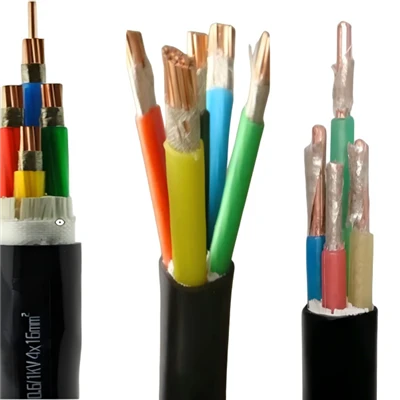
If you’re in the market for compensating cables, feel free to reach out to discuss your specific needs. We offer a wide range of types, jacket materials, and shielding options for every industry, and we’ll make sure you get the right cable with correct markings so you don’t have to worry about inaccurate readings or costly mistakes.
Wire References
- International Electrotechnical Commission (IEC) Standard 60584-3: Thermocouples – Part 3: Specifications and tolerance limits for extension and compensating cables
- ANSI MC96.1: Standard for Thermocouple and Thermocouple Extension Wire
- Process Instrumentation Society of America (PISA) Guide: Selecting and Installing Thermocouple Cables for Industrial Applications
Anhui Huawang Cable Co., Ltd.
As one of the most professional compensating cable manufacturers and suppliers in China, we also support customized service. If you’re going to buy discount compensating cable, welcome to get pricelist from our factory. Quality products and reasonable price are available.
Address: No.32, East Street, Batian Street, Datong Town, Tianchang City, Anhui Province
E-mail: Linda@huawangcable.com
WebSite: https://www.huawang-cable.com/
