If you’ve ever stood beside a rock crusher yard during a peak production run, you’ll know the crusher frame isn’t just a hunk of metal holding everything together—it’s the backbone of the whole operation. As someone who’s been supplying crusher frames for over a decade, I’ve seen firsthand how a poorly chosen material can turn a routine shift into a costly downtime nightmare. Last year, a construction client of mine lost $120,000 in a single week when their frame, made from a cheap, untested steel, cracked mid-run while processing river rock. That’s the kind of story that doesn’t just make me double-check every material spec before a shipment—it’s why I’m breaking down exactly what materials go into a quality crusher frame, why each matters, and how I make sure every frame leaves my warehouse ready to handle the harshest work sites. Crusher Frame
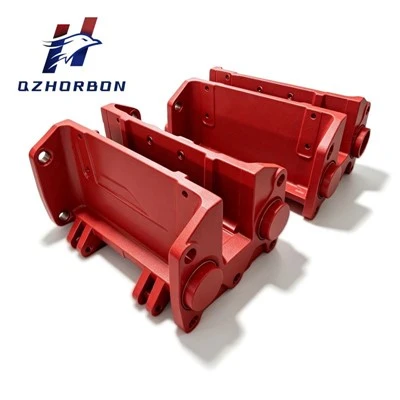
Crusher frames have to withstand forces most industrial parts never see. Think about it: you’ve got 200-ton loads of rock slamming into the frame hundreds of times an hour, extreme temperature swings from arctic mines to desert quarries, and constant vibration that would shake less durable materials apart in months. There’s no one-size-fits-all material here—every job, every crusher model, and even the rock type being processed demands a specific material. Over the years, I’ve narrowed down the core materials I work with, and I can tell you right now that none of them are “run of the mill” steel.
The most common material you’ll find in heavy-duty crusher frames is high-strength low-alloy (HSLA) steel, often called HSLA plate. This isn’t your basic construction steel—HSLA is made by mixing small amounts of alloying elements like manganese, chromium, and niobium into the steel during production. What that does is give the steel a way better strength-to-weight ratio than regular carbon steel. Let me put that in perspective: a HSLA frame can be 15-20% lighter than a regular carbon steel frame, so it’s easier to transport and install, but it can handle up to 30% more impact force without cracking. I started switching to HSLA frames full-time about eight years ago after a client in the Alberta oil sands told me their old carbon steel frames were failing every 18 months. We swapped them for HSLA, and they’ve gone four and a half years without a single frame crack. The key here is that HSLA isn’t one uniform grade—there are different HSLA specs for different applications. For example, HSLA 65 is perfect for primary crushers that process large, sharp rock because it has higher yield strength, while HSLA 50 works great for secondary crushers that handle smaller, more abrasive material like gravel. I always work with my clients to match the right HSLA grade to their specific crusher, not just pick the cheapest option.
Another material I see used a lot, especially for smaller crushers or frames that need extra resistance to wear, is manganese steel—also called Hadfield steel. Now, manganese steel is kind of a legend in the mining and quarry world, and for good reason. It’s a work-hardening material, which means the more impact it takes, the harder its surface gets. When it’s soft and new, manganese steel is actually pretty easy to machine, which makes it simpler to fabricate into a custom frame. But once you start pounding it with rock, the surface hardens up to Brinell hardness of 500 or more—harder than most rock being processed. That makes it way more resistant to abrasive wear than HSLA steel, which is a huge benefit for crushers that work with very gritty material like basalt or granite. I recently supplied a set of manganese steel frames to a client in Western Australia who processes iron ore, and they told me the frames don’t show any significant wear even after three years of use. The downside of manganese steel? It’s more brittle than HSLA when it’s fully hardened, so you have to design the frame with extra bracing to prevent it from cracking if it hits an uncrushable object like a steel pipe or a chunk of concrete. That’s why I always run a full load analysis for every manganese steel frame I build, making sure the bracing and weld points are strong enough to handle those unexpected impacts.
For some specialized applications, like recycling crushers that process metal or demolition waste, we use cast steel—specifically medium-carbon cast steel and high-chromium cast iron. Wait, cast iron? I know what you’re thinking—cast iron is brittle, right? But high-chromium cast iron is a different beast than the old cast iron frying pans your grandma has. It has 15-30% chromium added, which forms hard chromium carbons in the material, making it extremely wear-resistant. For recycling crushers that have to handle metal shards, which are sharp and can gouge soft materials, high-chromium cast iron frames last twice as long as HSLA frames. The trade-off is that cast steel and cast iron are harder to fabricate—you can’t bend or weld them as easily as plate steel, so they have to be cast in custom molds. That means custom orders take a bit longer, but for the right application, it’s worth it. I had a client that processes demolition concrete and rebar, and their HSLA frames were wearing out in less than two years because of the rebar slicing into the frame walls. We switched them to high-chromium cast iron, and they haven’t had to replace a frame in five years. It’s a specific solution for a specific job, but it’s become a go-to for my recycling clients.
Recently, I’ve started working with a small number of clients on hybrid crusher frames, which combine different materials in different parts of the frame. For example, a primary crusher frame might have HSLA steel for the main load-bearing sidewalls, manganese steel for the impact points where the rock hits, and cast steel for the weld joints that need extra strength. Hybrid frames are a bit more complex to design and build, but they give clients the best of all worlds—they’re lighter than full manganese frames, more wear-resistant than full HSLA frames, and last longer than either. I’ve only supplied hybrid frames to a handful of mine and quarry clients so far, but the feedback has been amazing. One mine in British Columbia told me their hybrid frames are lasting 25% longer than their previous all-HSLA frames, and they’ve cut down on maintenance time because they only have to replace small, worn sections of the frame instead of the whole thing.
Now, building a good crusher frame isn’t just about picking the right material—how you process and assemble that material makes all the difference in the world. I’ve seen two frames made from the exact same HSLA plate, but one works for five years and the other cracks in six months. That’s because of two big factors: heat treatment and welding. For HSLA frames, we always do a stress-relieving heat treatment after fabrication. When you bend, cut, and weld steel, it builds up internal stresses that can cause cracking when the frame starts taking impact. Stress-relieving involves heating the frame to a specific temperature (around 600 degrees Celsius for HSLA) and letting it cool slowly, which removes those internal stresses. For manganese steel frames, we do a solution heat treatment after fabrication, which locks in the alloy elements so the work-hardening property works properly. Skip that heat treatment, and the manganese frame won’t harden when you need it to, and it’ll wear out fast.
Welding is another make-or-break step. I only use certified welders who specialize in heavy industrial equipment, not general fabrication work. For each material, we use specific welding rods and procedures to make sure the weld is as strong as the base metal. For HSLA, we use low-hydrogen welding rods to prevent hydrogen-induced cracking, which is a common issue with high-strength steels. For manganese steel, we have to preheat the frame before welding to avoid cracking—manganese is sensitive to rapid temperature changes, so if you don’t preheat, the weld will be weaker than the surrounding steel and fail under impact. I have a standard set of weld procedures I follow for every material, and I train my team on them every quarter to make sure no one cuts corners.
I also do a lot of testing before any frame leaves my warehouse. It’s not just taking the welder’s word that the welds are good—we do non-destructive testing, like ultrasonic testing, to check for hidden cracks or voids in the welds. For new custom designs, we do a load test: we jack the frame to twice its maximum rated load, hold it for 24 hours, and check for any bending or permanent deformation. That extra step takes a bit more time, but it’s how I build trust with my clients. The last thing I want is for a frame to fail on a job site because I skipped a test to save time.
When I’m working with a new client, I don’t just ask “what size crusher do you have?” I ask questions about what they’re processing, how often they run their crusher, what kind of temperatures they work in, and if they ever run into uncrushable objects like rebar or rock chunks. Those details tell me which material is right for them. For example, a small gravel quarry that runs their crusher 8 hours a day, processing soft limestone, doesn’t need a heavy manganese steel frame—HSLA 50 is more than enough, and it’s cheaper. But a large iron ore mine that runs their crusher 24/7, processing hard rock, needs the extra wear resistance of manganese steel, even if it’s a bit more expensive upfront. It’s like buying a work truck—you don’t buy a heavy-duty 4×4 for just driving to the grocery store, and you don’t buy a half-ton pickup for hauling 10,000 pounds of rock. Matching the material to the job is key.
I’ve seen too many new quarry or mine operators make the mistake of buying the cheapest frame they can find, and it ends up costing them way more in downtime and replacement parts. Last year, a new construction company bought a frame from a generic supplier online for half the price of my HSLA frames. They used it to process concrete, and it cracked at the weld joint after 3 weeks. They ended up paying more for a replacement frame from me, plus lost revenue from the project that was delayed because of the downtime. That’s why I always tell my clients: a crusher frame is an investment, not an expense. The right material, built right, will last for years and save you a ton of money in the long run.

If you’re in the market for a crusher frame, whether you’re a small gravel quarry or a large mining operation, I can help you pick the right material for your specific needs. I work with every type of crusher, from primary jaw crushers to secondary cone crushers, and I’ve supplied frames to jobs all over North America. Every frame I build comes with a full material spec sheet, heat treatment records, and warranty, so you know exactly what you’re getting. If you’re tired of frames that crack too early or wear out too fast, reach out to talk through your project details. I’ll be happy to answer any questions and help you find a frame that works for your operation.
Crusher Hydraulic Systems References
- ASM International. (2007). High-Strength Low-Alloy Steels. ASM Handbook Volume 1: Properties and Selection: Irons, Steels, and High-Performance Alloys.
- Hadfield, R. A. (1888). The Properties of Martensitic Manganese Steel. Journal of the Iron and Steel Institute.
- DIN Standards Committee Steel and Metal. (2018). Cast Steels for Wear-Resistant Applications. DIN EN 10293.
- Crusher Equipment Manufacturers Association. (2020). Best Practices for Crusher Frame Design and Material Selection. Industry Technical Bulletin.
Quzhou Horbon Mining Parts Co., Ltd.
Quzhou Horbon Mining Parts Co., Ltd. is one of the most professional crusher frame manufacturers and suppliers in China, featured by high quality customized service and OEM service. Please rest assured to buy premium crusher frame at competitive price from our factory. Contact us for pricelist.
Address: No.8 Nanshan Road, Qujiang District, Quzhou City, Zhejiang Province, China
E-mail: horbonmining@gmail.com
WebSite: https://www.horbonmachinery.com/
