If you’re reading this, chances are you’ve stared at your IoT water meter’s app one too many times, wondering why it shows a weird, backwards flow reading or if it can even tell which way the water’s moving. As a guy who’s been selling IoT remote water meters for the last 7 years, I get it—most people buy these things to stop guessing about their water usage, not to fix plumbing head scratchers or catch someone illegally tapping into the line. A lot of customers ask me straight up: “Can your IoT water meters detect flow direction?” Let’s cut the jargon, answer that, and tell you why it actually matters way more than you think. IoT Remote Water Meter

First, let’s clear up a common myth: not all IoT water meters are built the same. Some cheap, basic models only measure total volume going one way, which is fine for most homes—unless you’ve ever had a backflow from your water heater, or a leak in a garden hose that’s siphoning water back into the main line. Wait, siphoning? Yeah, that’s exactly when a meter that can’t tell direction will lie to you. If water’s flowing backward, a one-direction meter might count it as “negative” and just subtract it from your total usage, or worse, ignore it entirely. You’d never know you’re wasting water, or even that your line has a problem, until your bill spikes and you’re left going “where did all that water go?”
Now, the good stuff: the IoT water meters we supply are designed to detect flow direction, and it’s not some magic trick. Let’s break down how it works, no engineering degree required. Most of our meters use a dual-sensor ultrasonic system. Ultrasonic tech is super common here because it doesn’t have moving parts (no gears to rust or wear out, which is a big win for long-term use) and it bounces sound waves off the water as it moves. If the sound waves hit particles moving with the flow, they shift a little; if they’re moving against, they shift the other way. The meter’s tiny onboard processor takes that shift, calculates the direction, and sends it to our cloud dashboard every 15 minutes or so. Some cheaper meters use a mechanical impeller to measure flow, but those can’t handle direction—if the impeller spins backward, it can’t tell, so it’ll just count it the same as forward. That’s why we skipped mechanical for our models; it’s the difference between accurate data and data that’s half wrong.
Wait, let’s test this with a real example. A small café in Chicago was one of our first commercial customers. They had a problem where their ice machine’s fill line would backflow during peak hours—when the building’s main pressure dropped, water from their overflow line would flow backward into the feed, wasting hundreds of gallons a month. Before our meter, they didn’t know the backflow was happening because their old meter only showed total forward volume. Our IoT meter caught the reverse flow in the first week, sent an alert to their maintenance team, and they fixed the check valve. That saved them almost $1,200 in water bills in the first 6 months. That’s the stuff that doesn’t make sense until you have a direction-sensing meter.
But why else does direction detection matter? Let’s talk about commercial properties first—apartment buildings, factories, retail spaces. A lot of cities have rules about backflow prevention because it can contaminate the main water supply. If your meter can’t detect reverse flow, you might be violating those codes without even knowing it. Our meters log every reverse flow event, so you can prove to the city you’re not creating a hazard, or catch a faulty valve early before it becomes a problem. For residential users, it’s about leak detection. If you have a hidden leak in your basement pipe, sometimes water can flow back when the pressure shifts from the main line. A standard meter will miss that, but ours will flag it, send you a push notification, and you can get it fixed before it turns into a mold issue or a flooded basement.
I know what you’re thinking: “Is this worth the extra cost?” Let’s do the math. The average residential water leak is about 10,000 gallons a month—no direction meter, you’ll pay for that. With a direction-sensing IoT meter, you catch it in 2-3 days, so you only waste a couple hundred gallons. For commercial, like that café, the payback is usually 3-4 months because of the water savings and avoiding code fines. Even if you’re a small property owner, it’s not a huge upfront cost, and the data you get is way more useful than just a “total used” number.
Now, let’s get real about limitations. No tech is perfect. Our meters can detect direction for flows as low as 0.1 gallons per minute, which is tiny, but if your pipe is so clogged that water barely moves at all, the sensor might not pick up the shift. Also, if you have really high-pressure spikes (like from a fire hydrant being opened nearby), the meter might have a tiny blip in direction reading, but the processor filters out abnormal pressure events so it doesn’t give you false alerts. We test every meter in our lab with real residential and commercial plumbing setups, so those edge cases are rare.
Here’s another thing a lot of people don’t talk about: the direction data pairs great with our remote monitoring. You don’t have to drive to the property, read the meter, or deal with estimated bills. If the meter detects reverse flow, you get an alert on your phone or email immediately. You can log in to your dashboard at any time, see a daily breakdown of forward vs. reverse flow, and track trends over months. For property managers, that means less time on site, fewer water bill disputes with tenants, and way fewer emergency calls for leaks.
I’ve had customers tell me they used to have tenants claim their high water bills were “wrong,” and now with our meter’s direction and flow data, they can pull a report that shows exactly when water was used—no more arguments. That’s a huge relief for both sides.
So to circle back to the original question: yes, IoT water meters can detect flow direction, but only if they’re designed to do it. A lot of the basic, budget models you’ll find online only measure forward volume, which is fine for some, but if you want accurate leak detection, code compliance, and actual control over your water usage, direction-sensing is non-negotiable.
If you’re tired of guessing where your water is going, or dealing with unexpected spikes, or just want a meter that works with you instead of against you, we can help. We’ve worked with residential homeowners, small businesses, and large property management companies across the country, and we can customize a setup that fits your needs. Whether you’re just testing one meter for your home or ordering a bulk install for a 50-unit apartment building, we’ll walk you through the process, answer all your questions, and make sure you get the right data to save money and hassle.
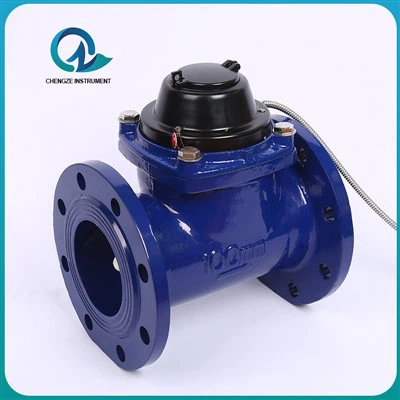
Don’t keep dealing with water bill headaches that could be avoided. Reach out to us for a no-obligation chat about how our IoT remote water meters with flow direction detection can work for you.
IoT Remote Water Meter References
- National Water Research Institute. (2021). Backflow Detection and IoT Metering for Residential Water Conservation.
- International Association of Plumbing and Mechanical Officials. (2022). Smart Meter Requirements for Commercial Backflow Monitoring.
- Ultrasonic Flow Meters: Principles and Applications. (2020). Journal of Water Infrastructure and Sustainability.
Shandong Chengze Instrument Co., Ltd.
We’re well-known as one of the leading iot remote water meter manufacturers and suppliers in China, featured by quality products and good service. Please rest assured to buy high-grade iot remote water meter for sale here from our factory. Also, customized service is available.
Address: No.7, Wensi Road North Industrial Park, Liguan Town, Lanshan District, Linyi City, Shandong Province, China
E-mail: czwatermeter@163.com
WebSite: https://www.cz-watermeter.com/
