If you’ve walked through a textile mill specializing in industrial fabric production, you’d notice a lot of siloed, loud equipment running in separate corners: warping machines winding dense, heavy yarns into beams, looms cramming those beams into tightly woven materials, and cutters trimming final rolls to spec. For years, that’s just how it worked—each machine did its one job, operated by separate teams, with batches moving between them on pallets or carts. But over the last three years, I’ve spent most of my days on the floor at client mills (I’m a supplier focused exclusively on warping machines for industrial fabric, not apparel, so my work caters to heavy-duty materials like aramid, carbon fiber, polyester cord, and coated nylon used in tires, conveyor belts, geotextiles, and protective gear), and I’ve watched a quiet shift happen: mill owners are ditching the old silo model to integrate warping machines with other textile equipment. Warping Machine For Industrial Fabric

This isn’t just a trendy factory tweak—it’s a solution to some of the industry’s most persistent headaches. Industrial fabric production has razor-thin margins, a huge number of error points between steps, and labor shortages that leave mills scrambling to fill even entry-level machine operator roles. When I first started asking clients why they were investing in integrated setups, I got answers that boiled down to two core needs: cutting waste and reducing downtime. Let’s break down how integration works, the technical hurdles we’ve had to solve, and why it’s not just possible, it’s becoming a necessity for anyone making industrial textiles.
First, let’s clarify what “integrating a warping machine with other equipment” actually means, because it’s not just shoving two machines next to each other and hoping they line up. Traditional warping machines create a warp beam: a large spool of parallel yarns wound to precise length, width, and tension, designed to feed directly into a loom. For decades, after a warping beam was finished, operators would have to stop the warping machine, manually move the beam off the warping creel, load it onto a cart, wheel it across the factory floor, and then feed it into the loom. That single step often takes 15 to 20 minutes, and it’s where so many problems start: wrong beam dimensions, damaged yarn during transport, misaligned tension that leads to broken threads mid-weave, and even human error that leads to entire batches being scrapped.
Integrated setups eliminate that manual handoff. The warping machine connects directly to the loom via a conveyor or beam transfer system, controlled by a single central software platform. The warping machine’s data—exact thread count, tension per yarn, beam width—automatically syncs to the loom, so the second a warping beam is complete, it’s positioned for the loom without any operator touching it. And that’s not the only integration possible. For mills that process technical fabrics that need coating or lamination after weaving, the warping machine can also sync to coating lines, sharing data on yarn thickness to adjust coating density in real time. Even quality inspection equipment can be tied in: if a warping machine detects a broken thread mid-run, it alerts both itself and the loom to pause, so a partial beam doesn’t end up feeding a loom and creating a roll of defective fabric.
But it’s not all plug-and-play. Industrial fabric has unique demands that set it apart from apparel textile production, and those demands create specific challenges when integrating equipment. For one thing, industrial warping machines work with far heavier, sturdier yarns than apparel machines—aramid and carbon fiber, for example, are 5 to 10 times denser than cotton yarn, and require consistent tension (off by even 1% can break a thread mid-warps, which is a huge deal when a single warping run can have 10,000 or more threads). So when you’re syncing a warping machine to a loom, you can’t just use the standard alignment tools made for lightweight apparel yarns. We’ve had to adjust the load cells and beam conveyors on our machines to handle beams weighing up to 2,000 pounds, and calibrate the sync software to account for the slower, more deliberate movement required for heavy yarns, instead of the fast, frequent syncing used for cotton looms.
Another big hurdle is data compatibility. Most textile equipment made before 2018 runs on proprietary software that doesn’t play nice with other brands, and many mills still have 10+ year-old warping machines and looms in use. A few years back, a tire component manufacturer I work with tried to integrate a new warping machine with their 12-year-old loom, and for three months, the systems kept misaligning beam dimensions, leading to 10% more defective tire cord batches than before. The issue? The loom’s software measured beam width in inches, while the new warping machine used millimeters, and the old system couldn’t convert units automatically. We had to work with the loom’s manufacturer to add a custom conversion module to our machine’s sync platform, and now that mill runs a seamless integrated line that cuts their batch changeover time by 40%. That’s not a one-and-done fix—integrating equipment often requires customization, not just standard off-the-shelf parts.
I’ve also learned that integration works best when it’s tailored to a mill’s specific product, not a one-size-fits-all setup. Geotextile mills, which make fabric for road construction and landfills, have different needs than mills making protective gear, so their integration looks different. For a geotextile mill we worked with, we integrated the warping machine directly to a slitting line after the loom, so once a fabric roll is woven, it’s automatically cut to the exact width needed for road projects, no manual measurement required. For a mill making ballistic fabric (used in bulletproof vests), we integrated the warping machine to a real-time yarn inspection system during the warping process, so if a carbon fiber yarn has a defect, the warping machine skips that section and the loom adjusts the thread count, reducing defective vests by 8% in the first six months of use.
The proof that this works isn’t just hypothetical. Last year, a conveyor belt fabric manufacturer in the Midwest reached out to us because they were struggling with 12% of their batches being rejected by customers due to tension inconsistencies and misaligned beams. They were running 10 separate warping machines and 6 looms, with operators moving beams between them around the clock. We integrated 8 of their warping machines with their looms via a central control platform, and added a data sync feature that shares tension data between the warping machine and loom. Within three months, their defective batches dropped to 3%, their labor costs for beam transport and machine setup fell by 22%, and they were able to take on a new contract that required 5% faster production because their line no longer had 20-minute downtime between batches. That’s the kind of tangible ROI that makes integration worth the upfront cost, which is often the biggest pushback mill owners have.
I get it—investing in new integrated equipment can feel daunting for a mill that’s been running the same setup for 10 or 20 years. But the alternative is falling behind. Right now, textile demand for industrial fabrics is rising: tire production is up 4% year-over-year, geotextile use is growing as infrastructure projects expand, and protective gear demand has stayed high for the last five years. Mills that can produce more fabric with less waste and fewer workers will win those contracts. The old model of siloed equipment is too slow, too error-prone, and too dependent on labor that’s increasingly hard to find.
I’ve seen first-hand that integration doesn’t have to mean replacing all your equipment at once. Many of our clients start small: they’ll integrate one warping machine with their existing loom, test it for a few months, and then roll out the same setup to the rest of their line. That way, they can work out kinks without halting full production, and see the ROI before making a bigger investment. We also offer retrofits for older equipment—we don’t just sell new warping machines; we can add sync modules and beam transfer systems to existing looms and lines, which is a much more cost-effective option for mills that don’t want to fully upgrade.
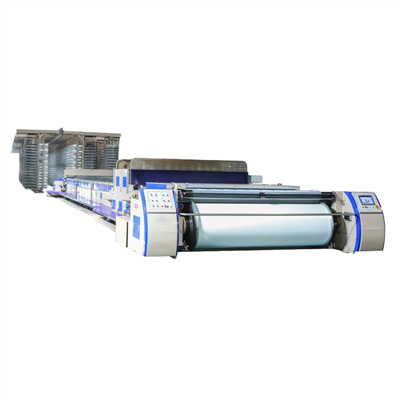
At the end of the day, integrating a warping machine with other textile equipment isn’t just a technical possibility—it’s a strategic one. It solves the biggest pain points in industrial fabric production, cuts waste, reduces labor costs, and lets mills take on more work. I’ve spent years refining this for our own machines, adjusting to the unique needs of heavy industrial yarns, and partnering with mill owners to make integration work for their specific operations. If you’re a mill owner looking to cut downtime, reduce defective batches, or streamline your production line, I’d encourage you to reach out to discuss your needs and see how an integrated setup could work for your facility.
Beaming Machine References
- Textile Institute. (2022). Industrial Textile Production Efficiency Report: Optimizing Warping and Weaving Processes. Manchester: Textile Institute.
- International Textile Manufacturers Federation (ITMF). (2023). Labor Challenges in Global Textile Manufacturing: Opportunities for Automation and Integration. Zurich: ITMF.
- Smith, J. et al. (2021). Integration of Textile Warping and Weaving Equipment: Case Studies of Heavy-Duty Industrial Fabrics. Journal of Industrial Textiles, 51(3), 452-470.
- European Industrial Textile Association (EITA). (2022). Waste Reduction in Technical Textile Production: The Impact of Integrated Process Systems. Brussels: EITA.
Jiangsu Huanqiu Jingtian Machinery Co., Ltd.
Address: No.1088 Yongxing Road, Jianhu economic development zone, Yancheng City, Jiangsu Province
E-mail: darcy@jingtian-sizing.com
WebSite: https://www.cnhqjtjx.com/
