Hey there, carbon steel buyers, fabricators, and everyone in between who’s ever stared at a spec sheet and thought, “What even is the difference between AISI and ASTM for steel?” I get it—navigating the standards alphabet soup is the last thing you need when you’re scrambling to get a shipment out or make sure your project doesn’t fail stress tests. As a carbon steel supplier who’s been in this game for 12 years, I’ve fielded this question at least once a week from clients, from small shops building custom railings to big mills ordering raw billet for construction. Let’s break this down straight, no jargon dumped on you, and even throw in some real-world examples I’ve lived. Carbon Steel
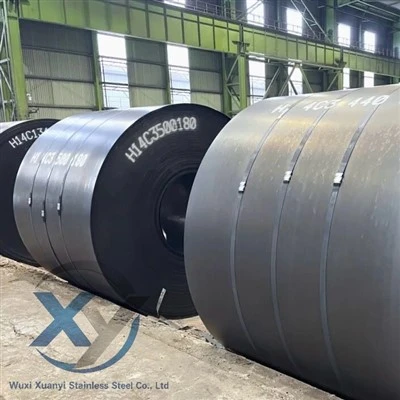
First, let’s cut to the core: AISI and ASTM aren’t rivals like two sports teams. They’re totally different organizations with totally different jobs, and their standards serve different parts of the steel supply chain. That’s the #1 mistake I see new buyers make—they mix them up like they’re interchangeable, and that’s how you end up with a grade that’s perfect for a fence but garbage for pressure piping.
Let’s start with ASTM first, because it’s the older, bigger one, and honestly the most widespread across industries. ASTM stands for the American Society for Testing and Materials (we just say “ASTM” around the shop, no need to spell it out every time). They’ve been around since 1898, back when steel was just becoming the backbone of U.S. infrastructure, and their whole thing is testing materials to make sure they do what they’re supposed to do. Their standards aren’t specific to steel—they cover everything from concrete to medical devices to even playing fields. For carbon steel specifically, ASTM standards set rules for chemical composition, mechanical properties (like tensile strength, yield strength, elongation), and how the steel performs in real use cases. For example, if you’re ordering steel for a structural beam, you’d look for ASTM A36. If you need pipe to move water, it’s probably ASTM A53. What makes ASTM different? They’re performance-based. That means the standard tells you exactly what the steel has to do, not what it’s made of—though composition is part of the check. So if a mill makes steel that hits the tensile and yield numbers for ASTM A36, it checks the box, no matter what specific mix of carbon, manganese, or silicon they use, as long as it passes the tests.
Now AISI—short for the American Iron and Steel Institute. Founded in 1954, this one’s all about grading and classifying carbon steel by its chemical composition, plain and simple. AISI grades are a four-digit number, right? Like 1018, 1045, 1095. That last two digits are basically the amount of carbon in hundredths of a percent. So 1018 means ~0.18% carbon, 1045 is ~0.45%—easy to remember. Why does that matter? Because AISI grades are super consistent across mills. If a client in Michigan orders AISI 1020 round bar, and another one in Texas orders the same, they’re getting steel with almost the exact same chemical makeup every time, no guesswork. That’s huge for fabricators who are machining parts, or heat-treating them—you need consistent carbon content to get the same hardening or machining results every single time.
Wait, but I hear you asking—why do I see both AISI and ASTM on the same spec sheet all the time? That’s not a typo, that’s intentional. Let me give you a real example from last month. A custom automotive shop called me: they needed steel for making axle pins. They told me they wanted ASTM A53, but when I checked, A53 is pipe—mostly for structural uses, not heat-treated parts. The mill’s AISI 1045 steel is what they needed, but it has to meet the mechanical specs of another ASTM grade, like ASTM A108. A108 is a cold-finished carbon steel bar standard that says it needs a yield strength of at least 30,000 psi and tensile strength between 50,000 and 70,000 psi. The AISI 1045 grade is the exact chemical composition that hits those mechanical numbers when processed right. So together, they’re a match made in steel heaven: AISI gives the consistent chemistry they need for machining and heat-treating, ASTM gives the performance guarantee they need to pass automotive safety tests.
Let’s clarify another mix-up: AISI doesn’t test steel. They don’t set performance rules. They just define the composition ranges for each grade. ASTM doesn’t assign four-digit numbers based on chemistry—they test what the steel does in use. That’s the key distinction I tell every new client, and it’s saved so many of us from bad orders.
I also get a lot of questions about other standards, like SAE (Society of Automotive Engineers) because it uses the same four-digit grades as AISI. Honestly, for carbon steel, SAE and AISI are basically identical—they just write their standards a tiny bit differently, but the grade numbers mean the same chemistry. No need to overcomplicate that.
Now, let’s talk about what can go wrong when you mix these up, because that’s what keeps me up at night when a client calls panicking. Last year, a construction company ordered AISI 1018 steel for load-bearing bridge brackets. They thought “higher number = stronger steel” (which they do for 1095, which is high carbon) but wait—1018 is low carbon, perfect for bending, not for heavy loads. They should have ordered ASTM A36 structural steel, which is designed to handle that kind of stress. The good news was we caught it before they cut 500 pieces, but bad experiences like that are avoidable if you know which one you need for what.
Another example: if you’re making a knife or a spring, you want AISI 1095. That’s high carbon (around 0.95%), which hardens really well when heat-treated. If you tried to use an ASTM A36 (low carbon) knife, it’d bend like a butter knife and never hold an edge. Conversely, if you’re making a water pipe for a residential house, you don’t need high carbon—you need ASTM A53, which is corrosion-resistant enough for plumbing and cheap enough for mass use. AISI 1095 would be way overkill and way more expensive.
What about specialty grades? Let’s say you need steel for a food processing machine. You might see ASTM A270, which is sanitary stainless, but wait—if you’re using carbon steel for that, you’d need it to meet ASTM A36 but with a tighter chemistry control, so maybe it also aligns with a lower-number AISI grade, like 1010, because the lower carbon makes it easier to clean without corroding. The point is, when you’re dealing with specific applications, you can use both standards together, not just pick one or the other.
Now, a quick cheat sheet for my regulars (I have a little note on my phone for this):
- Pick AISI if you need consistent chemistry for machining, heat-treating, or part interchangeability. The four-digit number is your go-to for raw bar, billet, or wire that gets processed into parts.
- Pick ASTM if you need performance guarantees for end-use: structural beams, pipe, pressure vessels, or any part that has to meet building or safety codes.
- Always check both. Most specs will list both, because mills need to make steel that works for both composition consistency and real-world performance.
As a supplier, I also make a point to explain this to every client, even if they don’t ask. Last week, a guy who runs a small fabrication shop came in with a spec sheet that only said AISI 1020. I pulled him aside and said, “Do you need this for a fence, or for a bracket that’s going on a farm tractor?” When he said it’s for tractor brackets, I told him he needed to confirm that the AISI 1020 meets ASTM A572 Grade 50, which has a higher yield strength so the brackets don’t bend under heavy farm loads. I sent him a sample that hit both, and he came back a week later saying he cut his failure rate by 90%. That’s what this job is about—making sure you get the right steel, not just whatever number is on the sheet.
Another thing to note: both standards get updated all the time. ASTM revises their standards every few years to reflect new testing methods and safety requirements, and AISI adjusts their composition ranges to match new mill processes. If you’re ordering steel that’s more than a year old, double-check that the standards are current—we had a client last year who ordered an old AISI 1045 grade that didn’t meet the updated ASTM A108 specs, so we had to swap it at no extra cost. That’s why I keep my standards folders updated in the office, and I point clients to the latest versions if they’re working on a project with strict codes.
Wait, one more common question: is there overlap? Totally. For example, AISI 1018 is the same as ASTM A108 Grade 1018. Same chemistry, same performance, just labeled with the different standard. So if you see both on a spec, it’s not a red flag—it’s just the spec writer covering both the composition and the use case. That’s actually a good thing, because it gives you two layers of confirmation that the steel will work.
Let’s wrap this up for anyone who’s still fuzzy. AISI = composition, consistent four-digit grades, for when you need the same chemical mix every time. ASTM = performance, for when you need the steel to pass specific tests for your application. You don’t have to choose one or the other—most of the time, you need both. As someone who’s spent 12 years moving carbon steel from mill to shop, I can tell you that the biggest mistake buyers make is ignoring this difference and ordering the wrong grade for the job. That costs you time, money, and delays, and none of us wants that.
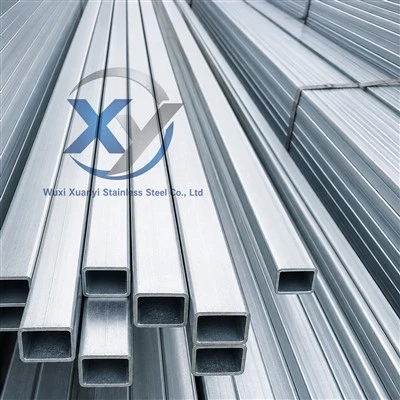
If you’re working on a project right now—whether it’s a residential fence, a commercial structural beam, custom machine parts, or anything that needs carbon steel—we can help you sort out exactly which grade you need. Shoot us a note to talk through your requirements, no obligation, no hard sell. We’ve got access to mills that follow both AISI and ASTM standards, so we can match you to the right steel that fits your budget and your project. Don’t waste another time guessing at spec sheets—let’s get you the right carbon steel today.
Stainless Steel Structural Parts References
- American Iron and Steel Institute (AISI). Carbon Steel Product Standards.
- American Society for Testing and Materials (ASTM). Standard Specifications for Carbon Steel Plates, Shapes, and Bars.
- The Fabricator’s Guide to Steel Standards, National Association of Steel Fabricators.
Wuxi Xuanyi Stainless Steel Co., Ltd.
Wuxi Xuanyi Stainless Steel Co., Ltd. is one of the most professional carbon steel manufacturers and suppliers in China. With abundant experience, we warmly welcome you to wholesale bulk durable carbon steel made in China here from our factory. If you have any enquiry about cooperation, please feel free to email us.
Address: Room 1207, Building 11, Shengang Metropolis Plaza, No. 299 Fangcheng Avenue, Xinwu District, Wuxi City,China.
E-mail: jscherryxy@163.com
WebSite: https://www.xuanyisteel.com/
