Hey there, if you’ve ever wondered how metal parts like shafts, bolts, or custom bushings get that super precise, smooth finish that fits perfectly every time, chances are CNC turning was involved. As a CNC turning supplier, I get asked all the time what tools we actually use to make that happen—most folks just see the finished part and have no clue about the gear that makes it possible. So I’m breaking down the common tools we rely on every single day, no fancy jargon overload, just real talk from someone who runs a shop. CNC Turning
First up, the main workhorse of any CNC turning center: the turning inserts. Wait, let me clarify—you don’t just stick a random metal bit in the machine. Turning inserts are those small, replaceable cutting tips that get mounted on tool holders, right? We use coated carbide inserts 90% of the time now, not the old high-speed steel ones that dull after 10 parts. Carbide’s way harder, and the coatings (like titanium nitride or titanium carbonitride) cut down on friction so the part doesn’t get burned mid-turn. I remember when we still used uncoated inserts years ago—we’d change ’em every 50 pieces, now we go 500 or more. It’s not just cheaper, it makes the parts way more consistent too. We match the insert grade to the material we’re cutting: for aluminum, we use sharp, positive-rake inserts that won’t tear the soft metal; for stainless steel, we go with tougher, more heat-resistant inserts that can handle the high temps from cutting hard alloys. No one size fits all here, trust me.
Next, tool holders—those are the parts that grip the inserts and mount to the turret on the CNC lathe. A lot of new guys in the shop mix up inserts and holders, but the holder is just as important. We use both square shank and modular tool holders depending on the job. Modular holders are awesome because you can swap out a different insert or even extend the tool length quick without taking the whole holder off, which saves a ton of setup time. For boring operations, we use extended-reach holders too—if you’re turning a deep hole, a regular holder will flex and cause the part to have a wobbly wall, but extended-reach holders are rigid enough to keep cuts straight. We also make sure to tighten holders properly; loose holders are the #1 cause of bad finishes or broken inserts. I’ve had way too many mornings troubleshooting a part that came out all rippled, only to realize someone forgot to torque the tool holder to the right spec. Oops.
Then there’s the workholding gear, which is basically what holds your part steady while the lathe spins it. This is non-negotiable for any turning job—if the part moves even a tiny bit, the cut’s off, and you’re throwing away material. The most common one we use is a 3-jaw chuck. It’s self-centering, so you pop a round bar in, close the jaws, and it’s perfectly aligned almost every time. For square or hexagonal parts, or parts with odd shapes, we switch to a 4-jaw chuck, which lets you adjust each jaw individually to get that weird shape centered. We also use collets for smaller parts—collets are those spring-loaded sleeves that grip the part from the outside, way more precise than a chuck for tiny stuff like pins or connectors. And if we’re machining parts that we can’t grip from the outside (like hollow tubes we need to machine the inside of), we use a faceplate to mount the part on its end. Each workholding tool has its sweet spot, so we pick based on the part size, shape, and material.
Wait, can’t forget about boring bars—those are for making internal cuts, right? If you need a hole to be a specific diameter, or you’re tapering an internal wall, a boring bar is what does that. They’re long, rigid tools that fit into the turret, and we adjust their tip position to get the exact diameter we need. Boring bars are tricky because they can vibrate if they’re too long, especially when cutting hard materials. We always try to use the shortest boring bar possible for the job to minimize vibration—vibration causes those annoying chatter marks on the part surface, which no customer wants. Recently, we got some anti-vibration boring bars that use a dampening weight inside the shank to cut down on that shake—game changer for deep internal cuts. Before that, we’d have to slow the spindle speed way down, which made jobs take forever, but now we can run full speed and still get a smooth finish.
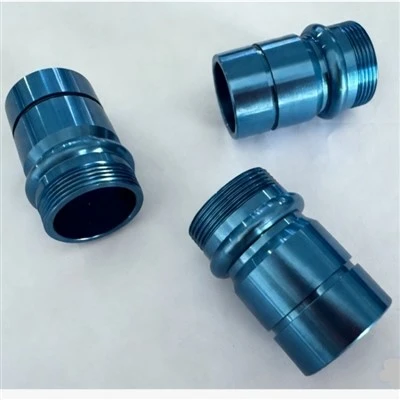
Another tool we use all the time is threading tools. Threads are everywhere—bolts, screws, pipe fittings, even custom threaded ends for mechanical parts. We use threading inserts specifically designed for cutting threads, right? Unlike regular turning inserts, threading inserts have a shaped tip that matches the thread profile (V-threads, Acme threads, whatever the customer needs). For external threads, we use a tool that feeds along the part’s outer diameter, and for internal threads (like a nut), we use a threading bar that goes inside the hole. We have to match the insert pitch to the thread pitch—so if you need 10 threads per inch, you can’t use an insert for 12 TPI, that’ll mess up the threads bad. It’s also a fine-tuning thing; we test a thread on every new job to make sure it fits the customer’s gauge perfectly, no cross-threading or loose threads.
Oh, and drilling tools! A lot of parts need a starting hole before we can do turning or boring. We use twist drills mostly for that, but for deeper holes, we’ve got gun drills. Gun drills are made specifically for deep hole drilling—they have a coolant channel inside to flush chips out of the hole, which is super important because if chips get stuck, they’ll scratch the hole or break the drill. Regular twist drills usually max out at a hole depth 10 times the diameter, but gun drills can go 30, 50, even 100 times the diameter. Last month we did a job for a hydraulic cylinder that needed a 2-foot deep hole in a 2-inch diameter steel bar—gun drill was the only tool that could pull that off without messing up. We also use center drills to make a little indentation for the drill to start in, so it doesn’t wander off on the first cut. That’s a small tool but saves so much time on setup.
Wait, do you need to mention chip control tools? Yeah, chips are a big deal when turning—those long, stringy chips can wrap around the part or tool and cause a mess. We use chip breakers on our inserts a lot now—little grooves on the insert’s tip that break the long chips into small, manageable pieces so they don’t get tangled. Before we had chip breakers, we’d spend 10 minutes after every job pulling chips off the part, which ate into our production time. It’s a tiny feature but makes a huge difference for consistency and safety.
Now, I should be real with you—no tool is “the best” overall. A lot of new customers come in thinking we use one magic tool for all jobs, but it totally depends on the material, part complexity, and quantity. For example, if we’re turning aluminum for a custom bracket for a drone, we’ll use sharp, low-friction inserts and collets to get a super smooth finish fast. If we’re turning hardened steel for a gear shaft that needs to last 10 years, we’ll use tougher, heat-resistant inserts and a rigid chuck to hold the part steady through the heavy cuts.
As a CNC turning supplier, we don’t just grab tools off the shelf and hope for the best—we test, adjust, and pick exactly what fits the job. And that’s why our parts are consistent, right? A bad tool choice can ruin a perfectly good bar of material, cost us time, and make a customer unhappy. We’ve learned that the hard way over the years—early on, we tried using generic inserts for a stainless steel job and ended up with 20 bad parts before we switched to the right grade. Lesson learned.
If you’re a manufacturer, engineer, or someone just looking to get custom CNC turned parts, you might not care about all the tool details, but knowing that we’re using the right gear for your job is a big deal. It means the parts come out on time, fit perfectly, and don’t have those annoying defects that require rework.
SLA Printing Whether you need small quantities for a prototype or a big run of production parts, we’ve got the tools and the experience to get it done right. If you’re looking to source CNC turned parts and want to chat through your requirements, feel free to reach out to our team. We’re happy to walk through what tools we’d use for your specific part, answer any questions, and make sure you get exactly what you need.
References
- Smith, A. (2022). CNC Turning Tools and Application Techniques. Industrial Press.
- Jones, B. (2021). Modern Machining: Tooling Selection for Turning Operations. McGraw-Hill.
- Machine Tool Technology Association. (2023). Fundamentals of CNC Workholding and Cutting Tools. MTA Publications.
- Davis, J. (2020). Cutting Tool Materials for Turning Non-Ferrous and Ferrous Metals. SME Press.
- Thompson, L. (2022). Chip Control Strategies for High-Volume CNC Turning. Manufacturing Engineering Journal.
Dongguan Xinchuan Precision Manufacturing Co., Ltd.
As one of the most professional cnc turning manufacturers and suppliers in China, we offer a quick lead time for customized orders. Please feel free to buy precision cnc turning made in China here from our factory. Contact us for quotation.
Address: #16 Gangjian Road, Changping Town, Dongguan City, Guangdong, China. 523000
E-mail: FreeQuote@xcprecision.com
WebSite: https://www.xcprecisions.com/
