In today’s business world, certification and compliance are more crucial than ever. As a Certification and Compliance supplier, I’ve seen firsthand the significant role employees play in these efforts. Let’s dive into how employees contribute to making sure a company meets all the necessary standards and gets those important certifications. Certification and Compliance
Understanding the Basics of Certification and Compliance
First things first, let’s quickly go over what certification and compliance are. Certification is like a stamp of approval. It shows that a company, product, or service meets certain standards set by an industry or a regulatory body. For example, ISO certifications are well – known worldwide and cover areas like quality management (ISO 9001), environmental management (ISO 14001), and information security management (ISO 27001).
Compliance, on the other hand, means following the laws, regulations, and industry standards that apply to your business. This could be anything from labor laws to data protection regulations like GDPR in the European Union.
Employee Awareness and Training
One of the most fundamental ways employees contribute is through awareness and training. When employees understand what certification and compliance mean for the company, they’re more likely to do their part.
We offer training programs that are super important. These programs are not just boring lectures; they’re interactive and practical. We teach employees about the specific standards relevant to their jobs. For instance, if we’re working on a food safety certification for a client, we’ll train the employees on proper handling, storage, and preparation of food to meet the food safety standards.
Employees also need to be aware of the company’s compliance policies. We help companies develop clear and easy – to – understand policies, and then we make sure employees know about them. This could be through regular meetings, online training modules, or even posters around the workplace. When employees are aware of these policies, they can make better decisions in their day – to – day work.
Day – to – Day Operations and Compliance
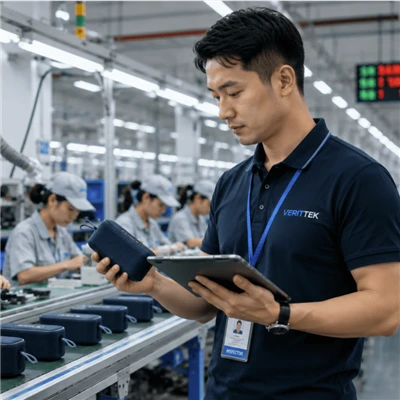
In the daily grind, employees are the ones who actually implement the processes that lead to compliance. Take a manufacturing company aiming for a quality management certification. The production line workers need to follow the standard operating procedures (SOPs) precisely. They have to make sure that every product they make meets the specified quality criteria.
In an office environment, employees need to comply with data protection rules. This means not sharing sensitive customer information without proper authorization, using secure networks, and following the company’s data handling policies. For example, if an employee in a marketing department wants to use customer email addresses for a new campaign, they need to make sure they’ve got the proper consent, which is a big part of compliance.
Documentation and Record – Keeping
Documentation is a huge part of certification and compliance. Employees are responsible for creating and maintaining accurate records. In a healthcare setting, for example, nurses and doctors need to document patient care accurately. This documentation is not only important for the patient’s well – being but also for meeting regulatory requirements.
In a manufacturing company, employees need to record production data, quality control checks, and any deviations from the standard processes. This data is used to prove to auditors that the company is following the required standards. We help companies set up proper record – keeping systems, and employees are the ones who actually use these systems on a daily basis.
Reporting and Communication
Employees are also the eyes and ears on the ground when it comes to potential compliance issues. If an employee notices something that doesn’t seem right, they need to report it. This could be a safety hazard in a factory, a violation of data privacy, or an accounting irregularity.
We encourage employees to speak up through anonymous reporting channels if they’re afraid of retaliation. Once an issue is reported, it’s important for employees at all levels to communicate effectively. Managers need to investigate the issue promptly, and then communicate the findings and actions taken to the relevant parties. This transparency is key to maintaining a compliant and certified environment.
Continuous Improvement
Certification and compliance are not one – time things; they’re ongoing processes. Employees play a big role in continuous improvement. They’re the ones who are in the trenches, doing the work every day, so they often have great ideas on how to improve processes.
For example, a customer service representative might notice that a certain process for handling customer complaints is causing delays and frustration. By sharing this feedback, the company can make changes to the process, which not only improves customer satisfaction but also helps in meeting service – level standards for certification.
We work with companies to create a culture of continuous improvement. We encourage employees to suggest ideas and participate in improvement projects. This could be through suggestion boxes, team meetings, or dedicated improvement teams.
The Impact of Employee Engagement
When employees are engaged in certification and compliance efforts, the results are amazing. A company with engaged employees is more likely to achieve and maintain its certifications. Engaged employees take pride in their work and are more committed to following the rules.
We’ve seen companies where employee engagement has led to significant improvements in compliance rates. For example, in a financial institution, when employees were more engaged in anti – money laundering compliance efforts, the number of suspicious transaction reports increased, which is a sign that the company is doing a better job of following the regulations.
How We Can Help
As a Certification and Compliance supplier, we’re here to support your company and your employees every step of the way. We offer customized training programs that are tailored to your specific industry and needs. Our experts can help you develop and implement compliance policies, set up record – keeping systems, and create a culture of continuous improvement.

If your company is looking to get certified or improve its compliance, we’d love to have a chat with you. We can work together to understand your goals and come up with a plan that works for you. Whether it’s a small business or a large corporation, we have the experience and the tools to help you succeed.
Contact Us
Quality System Audit If you’re interested in learning more about how we can assist your company with certification and compliance, don’t hesitate to reach out. We’re always ready to have a discussion with you and see how we can contribute to your success.
References
- Clarke, R. (2017). Information Technology and Data Privacy Law. Springer.
- Herjanto, D.A., & Raharja, F.S. (2019). Employee Engagement: A Review of Definitions, Theories, and Research. Thinking Journal of Business Research, 2(2), 73 – 80.
- ISO. (2023). ISO Standards Overview. International Organization for Standardization.
Verittek Standards Co., Ltd.
As a professional certification and compliance service provider in China, we help clients improve overall product quality and stability by providing third-party inspection services. If you have any enquiry about cooperation, please feel free to email us.
Address: Room 1002, Building 1, Tian’an Industrial Building, Panyu Energy Saving Technology Park, No.555 North Panyu Avenue, Donghuan Street, Panyu District, Guangzhou City, China.
E-mail: sales@verittek.com
WebSite: https://www.verittek.com/
