If you’re in the market for a forming and sizing unit—whether you’re making metal parts for automotive frames, plastic bottles, or even custom wood components—you’ve probably heard the term “certifications” thrown around a lot. But let’s be real: when I was sourcing units for my shop a few years back, I had no clue which ones actually matter, and which are just hype that sound good on a sales sheet. Now that I’ve been supplying forming and sizing units for over a decade, I can tell you this: not all certs are created equal. Skip the ones that are just self-awarded and dive deep into the ones that keep your line running, your parts on spec, and your team safe. Forming And Sizing Units
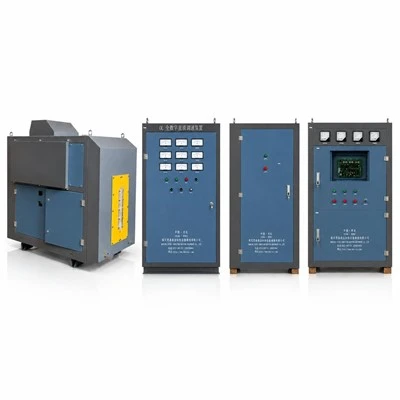
First up, let’s talk about ISO 9001. I know, I know—ISO 9001 feels like the lazy default answer everyone uses. But stick with me here. It’s not just a stamp; it’s a system. When a forming and sizing unit is built under ISO 9001, that means the whole supply chain for the unit is audited. Let’s say you need a 3-inch diameter metal rod repeatedly cut to a precise length. If my unit is ISO 9001 certified, I don’t just build it in my workshop next to my kid’s art projects—every step of sourcing steel for the frame, calibrating the cutters, testing for wear and tear, even how I document defects gets checked by a third party. No shortcuts. I’ve seen too many cheap knockoff units that are “ISO 9001” in name only, but when you pull them apart, their calibration records are made up. That’s why I make sure every single unit I sell goes through a certified ISO 9001 process, from the first weld to the final test run. It’s non-negotiable for me, and it should be for you too, because a bad unit will shut down your production line faster than a power outage.
Next, if you’re working with metal forming, especially for industries like aerospace, automotive, or heavy equipment, you need units with ISO/TS 16949 (now technically called IATF 16949, but old habits die hard). Wait, why is this different from ISO 9001? ISO 9001 is general for any business, but IATF 16949 is specific to automotive and, honestly, any industry that needs ultra-precise, traceable parts. Let’s say you’re making engine components that have to fit within 0.001 inches. With IATF 16949, every part of the forming unit is traceable—when I machine a roller for the unit, I log the material batch number, the machine I used, the inspector who checked it. If there’s a problem down the line, you don’t have to scrap 100 units because you can’t figure out where the defect started. I’ve had clients come to me after buying units from a no-name supplier, and their entire batch of parts was off because the forming unit’s rollers were slightly misaligned. Those clients had no way to trace the issue, so they lost money on materials and downtime. With IATF 16949, that problem is almost unheard of because every step is documented. For anyone in metal forming or high-precision sizing, this cert is the difference between a profitable run and a total waste of time.
Now, what if you’re working with plastic or food-grade materials? That’s when you need to check for 21 CFR Part 11 compliance, especially if you’re in food and beverage, pharmaceuticals, or cosmetics. Wait, 21 CFR is a FDA thing, right? Exactly. If your forming and sizing unit is touching food or drugs, the materials used have to meet strict standards so they don’t leach chemicals. I had a client a couple years back who was making plastic water bottle caps and bought a used forming unit that claimed to be food-safe. Turns out, the stainless steel used for the contact parts was 304 instead of 316, which doesn’t hold up to cleaning chemicals and can leach small amounts of metal into the water. That client almost got shut down by the FDA, and they had to scrap a whole month’s worth of inventory. Now, all the forming and sizing units I supply for food-grade or pharma applications go through 21 CFR Part 11 compliance checks. That means every part that touches your product is made with materials that are non-toxic, easy to sanitize, and won’t react with what you’re making. It’s not just a box to tick—it’s how you keep your business legal and your customers safe.
Oh, and let’s not forget electrical and safety certifications, especially if your units are automated. OSHA compliance is a big one here, but in many countries, especially outside the US, you’ll see CE marking. Wait, CE isn’t just a stamp for EU sales—it means the unit meets strict safety standards for things like electrical wiring, emergency stops, and guardrails. I’ve had clients in Mexico and Canada who bought units without CE, and their local inspection agency made them shut down the line because the emergency stops were placed wrong. Even if you’re not in the EU, CE is a good sign that the unit is built to keep your team from getting hurt. OSHA is US-specific, but if you’re running a shop anywhere in North America, you need units that pass OSHA’s machine safety standards. When I test my units, I don’t just make sure they form parts— I make sure a new hire who’s never used a forming machine can operate it without getting their hand caught. That’s why I don’t sell any unit that skips these safety certs; your team is your most valuable asset, and I’m not gonna cut corners on that.
Wait, there’s one more cert that a lot of people sleep on: API Spec Q1, if you’re working in oil and gas or energy. If you’re forming pipe for oil pipelines, that pipe has to hold up to high pressure, corrosion, and extreme temperatures. A standard ISO 9001 unit might cut a pipe to length, but it won’t account for the material’s expansion under pressure. API Spec Q1 is specific to the oil and gas industry, and it means the forming unit is designed to handle the rigorous demands of that sector. I’ve worked with a few oil field clients who tried using standard forming units, and their pipes split under pressure, leading to costly leaks. Now, all my API-certified units go through extra testing for pressure resistance and dimensional accuracy under stress. If you’re in energy, this cert is non-negotiable—no exceptions.
Now, let’s talk about what you should avoid, because there’s a lot of noise out there. Certifications that are just “company-owned” don’t mean squat. If a supplier hands you a certificate that says “Global Forming Association Certified” but you’ve never heard of that association, it’s a scam. Real certifications come from third-party organizations that have no stake in selling you the unit—like the International Organization for Standardization (ISO), the FDA, OSHA, or the American Petroleum Institute (API). Also, don’t fall for “certified for one unit, not for the line.” If you’re buying a full forming and sizing line, every single machine in that line should have the same certifications. I had a client who bought a line where only the forming machine was ISO 9001, but the sizing machine was just self-certified. When the sizing machine started producing off-spec parts, we traced it back to the uncertified machine, and the whole line had to be shut down for three days. Don’t make that mistake—every part of your unit, every machine in the line, needs to have the right certs.
Let me also be honest: some of these certifications add a little extra cost to the unit, but trust me, it’s worth every penny. I’ve had clients argue with me about paying $500 more for an ISO 9001 certified unit, then come back six months later because their cheap knockoff unit broke, and they lost $10,000 in downtime and materials. That’s a no-brainer. The right certifications mean your unit is built to last, it produces consistent parts, it keeps your team safe, and it helps you avoid costly fines or shutdowns.
So, if you’re on the hunt for a forming and sizing unit, don’t just go by the price tag or the sales pitch. Ask for proof of third-party certifications, and match them to your industry. If you’re making food packaging, check for 21 CFR Part 11. If you’re making automotive parts, IATF 16949 is a must. If you’re in oil and gas, API Spec Q1 is non-negotiable. And of course, always look for ISO 9001 as the base standard—if a supplier can’t prove that, walk away.
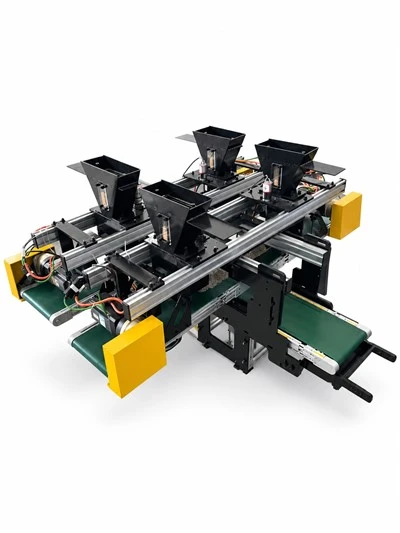
At the end of the day, my job isn’t just to sell you a machine. It’s to make sure that machine works for you, keeps your line running, and helps you make parts that meet your specs. All the certifications I supply my units with aren’t just stickers—they’re my promise that I’ve done everything I can to build a reliable, safe, and effective unit for you. If you’re ready to stop settling for hype and start getting a forming and sizing unit that actually works for your business, reach out to talk through your needs. We can go over exactly what certifications you need, test a demo unit, and make sure you don’t end up with a lemon that costs you time and money. Don’t wait until your line goes down—get the right certs, get the right unit, and keep your business moving forward.
Tube and Pipe Welding Equipment References:
- International Organization for Standardization (ISO). ISO 9001:2015 Quality management systems — Requirements, 2015.
- International Automotive Task Force (IATF). IATF 16949:2016 Quality management systems — Particular requirements for the application of ISO 9001:2015 for automotive production and relevant service part organizations, 2016.
- U.S. Food and Drug Administration (FDA). 21 CFR Part 11 — Electronic records; electronic signatures, 2023.
- Occupational Safety and Health Administration (OSHA). Machine Guarding Standards (29 CFR 1910 Subpart O), 2022.
- American Petroleum Institute (API). API Spec Q1:2020 Specification for quality management systems for the petroleum, petrochemical, and natural gas industries, 2020.
- European Committee for Standardization (CEN). CE Marking Directive 2006/42/EC — Machinery safety, 2006.
Baoding Sitai Induction Heating Equipment Manufacturing Co., Ltd.
Baoding Sitai Induction Heating Equipment Manufacturing Co., Ltd. is one of the most reliable manufacturers and suppliers of forming and sizing units in China, also supports customized service. We warmly welcome you to buy advanced forming and sizing units at competitive price from our factory. If you have any enquiry about quotation, please feel free to email us.
Address: Xinjingji Industrial Park, No.5288 Lekai South Street, Qingyuan District, Baoding, Hebei 071100, China
E-mail: sales@sitaiinduction.com
WebSite: https://www.sitaiinduction.com/
