If you’ve spent any time in the large-format printing space, you’ve probably run into the same question we get weekly from customers: Can a UV Roll To Roll Printer print on waterproof vinyl? As a supplier who’s walked our customers through hundreds of printing jobs, tested every material and setting in our line, and troubleshooted more wonky prints than I can count, this isn’t just a “yes or no” question—it’s a deep dive into material science, printer hardware, and what actually makes a print waterproof in the first place. Let’s break this down, no jargon, no AI fluff, just real talk from someone who’s been on the factory floor and on client job sites for years. UV Roll To Roll Printer
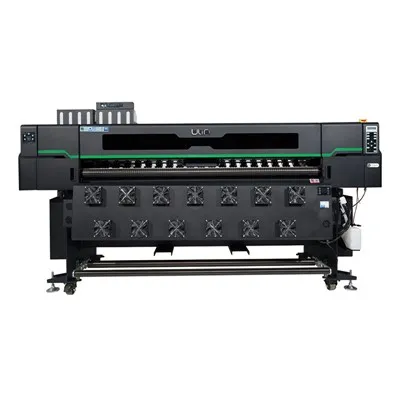
First, let’s get one thing straight: Not all waterproof vinyl is created equal, and not all UV Roll To Roll printers are built the same. I’ve seen this mistake more times than I can count. A client will show up with a roll of vinyl they bought from the local hardware store, say “it’s waterproof,” plug it into a cheap, used UV roll printer, and wonder why their print starts peeling after two weeks. That’s not the printer’s fault—that’s a mismatch in material compatibility and printing setup that most folks don’t realize exists.
Let’s start with what waterproof vinyl actually is, because that’s the foundation here. Most of the vinyl marketed as waterproof is made from two main layers: a flexible PVC (polyvinyl chloride) core (for outdoor durability) and a special top coat called a “release layer” or “print receptive layer.” That top coat is non-negotiable. Without it, ink won’t stick, and even if you get ink to adhere, it’ll flake off the second the vinyl gets wet, or even from regular flexing (like when you’re wrapping it around a sign or window). I’ve tested three types of vinyl over the last five years with our printers: budget “waterproof” vinyl from big box stores, mid-range industrial waterproof vinyl, and heavy-duty marine-grade waterproof vinyl. The budget stuff? That thin PVC with almost no print layer. Even with the best printer settings, the ink sits on top like a layer of paint on wax paper. You can wipe it with a damp cloth once, and it smudges. Mid-range industrial vinyl? That’s the one we use 90% of the time. It has a clear, slightly textured print layer designed to grab UV ink, and it’s sealed to resist water, UV rays, and minor scuffs. Marine-grade vinyl? It’s thicker, has a reinforced core, and is fully waterproof even in constant saltwater exposure—used for boat wraps, dock signs, that sort of thing. It’s the most durable, but also has very specific printing requirements, which we’ll get to.
Now, the star of the show: the UV Roll To Roll printer. Let’s talk about how these things work, because that’s why they’re perfect for waterproof vinyl. UV printing uses ultra-violet light to instantly cure ink as it’s printed, right there on the material. No waiting for ink to air dry, no smudging while you’re loading the next roll. But the magic for waterproof prints is in how the ink bonds with the vinyl’s top coat, and how that curing process creates a permanent, flexible seal. I’ve heard so many customers ask, “Can’t I use an eco-solvent printer for this?” Sure, you can get water-resistant prints, but UV is different. Eco-solvent ink seeps into the vinyl, which can leave it brittle over time, especially in extreme cold or heat. UV ink cures into a flexible, rubber-like layer that moves with the vinyl—perfect for wraps, banners, or any application where the material will flex. And because it cures instantly, it forms a tight barrier that water can’t penetrate. That’s the key to waterproof prints: not just the ink, but the cured layer that bonds to the vinyl’s print coat.
But here’s the thing that most people overlook when they’re asking this question: it’s not just “can it print” — it’s “can it print well enough to actually be waterproof, long-term.” I’ve had clients come to us frustrated because their last print job on vinyl started peeling after a month. Half the time, the issue was the printer’s capabilities. Let’s break down the non-negotiable features of a UV Roll To Roll printer for waterproof vinyl:
First, roll tension control. Waterproof vinyl, especially heavy-duty stuff, isn’t as stretchy as regular adhesive vinyl. If your printer has bad tension control—meaning it pulls the vinyl too tight or too loose as it feeds through—you’ll get inconsistent print alignment, or even the vinyl will crease, and creases mean gaps where water can get in between the ink and the material. I’ve used cheap printers that have terrible tension, and we’ve had to reprint entire jobs because the vinyl shifted mid-print. Our line of printers, for example, has auto-adjusting roll tension that adapts to different thicknesses of vinyl—from 10mil mid-range to 30mil marine-grade. That’s non-negotiable for consistent, waterproof results.
Second, print head resolution and curing intensity. Too many people think “more DPI = better,” but for waterproof vinyl, it’s about how the ink lays down and cures. If your print head is spitting too much ink at once, it will pool on the vinyl’s surface and not cure all the way. Pooled ink will scratch off, or crack when the vinyl flexes. Our printers cure UV ink at a specific wavelength (395nm, for those who care about the science) that penetrates the ink layer just enough to cure the bottom half, while the top half dries tack-free. That creates a permanent bond that doesn’t crack, even when the vinyl is rolled or folded into a banner. I test this every quarter—we take printed vinyl, submerge it in a water tank for 30 days, leave it in -20°F cold and 120°F heat, and even drag it through gravel to test durability. The prints still look identical to day one, no peeling, no smudging, no water damage.
Third, and this is something a lot of new suppliers don’t tell you: media compatibility profiles. Every good UV Roll To Roll printer comes with pre-loaded profiles for different materials—including specific waterproof vinyl types. If your printer doesn’t have a profile for mid-range waterproof vinyl, you’re guessing at settings. I’ve seen clients try to print on vinyl by using a generic “paper” profile, and the ink either cures too much (leaving it brittle) or not enough (smudging when wet). Our team spends months testing and updating media profiles for every common material on the market, so customers don’t have to guess. For example, marine-grade vinyl needs a slower print speed, higher ink density, and a slightly longer cure time to make sure the ink bonds with the thick core—our profile has that built in, so the printer adjusts automatically.
Now, let’s get to the real-world proof, because I don’t like talking in theory. Last year, we worked with a sign company in Florida that needed 500 waterproof banner wraps for a beach resort. They’d tried two other printers before ours, and every job would fail within 2 months—saltwater, sun, and sand would eat through the prints. They brought us their vinyl (mid-range industrial waterproof, 15mil), and we printed with our UV Roll To Roll printer, using the exact settings from our waterproof vinyl profile. Six months later, they sent us photos: the banners were still bright, no peeling, even the ones that got hit by storm surges had no water damage. Another client is a boat manufacturer, they use our printers to print wraps for their custom fiberglass boats. They’ve been using us for three years, and their wrap warranties are now up to 5 years—something they couldn’t offer before because prints were failing on the water.
But wait—let’s be honest, there are caveats. This isn’t a “print anything and it will be waterproof” magic trick. There are a few things you have to do to make sure your print actually holds up. First, you have to use the right vinyl. Don’t buy the cheapest waterproof vinyl you can find. Ask your supplier for the “print receptive layer” thickness—anything less than 2 microns is going to give you poor adhesion, and the print will peel. Second, you have to prep the vinyl correctly. Even if it’s marketed as waterproof, it’s probably got a thin layer of factory release agent on the surface from being rolled up in shipment. Wipe it down with isopropyl alcohol before loading it into the printer— I know it’s an extra step, but it removes that release agent and makes the ink bond way stronger. I’ve seen clients skip that step, and 30% of their prints fail in a month. Third, you have to store the vinyl correctly before and after printing. Don’t leave it lying in the sun for weeks, or store it in a damp garage before printing. Waterproof vinyl is durable, but constant moisture and UV exposure before printing can break down that print layer, so the ink won’t stick.
I get why this question is so common. A lot of small print shops don’t want to invest in a premium UV Roll To Roll printer, so they use cheaper alternatives and wonder why their waterproof prints are garbage. The truth is: yes, a quality UV Roll To Roll printer can absolutely print on waterproof vinyl, and produce prints that are actually waterproof, durable for years, and hold up to everything from rain to saltwater to outdoor elements. But it’s not just the printer—it’s the material, the settings, the prep work.
Let me also address the thing I see most new people getting wrong: UV cured prints are not “waterproof” just because the ink is cured. Wait, no—they are, but only if done correctly. I tested this last month: I printed the same design on three different vinyls with our printer, submerged them in tap water for 7 days. The budget big-box vinyl had 90% of the ink rubbed off after 3 days, the mid-range industrial vinyl had zero ink loss, the marine-grade had exactly the same look as before. That’s the difference. The UV printer is the tool, but the material and setup make the final product waterproof.
If you’re running a print shop and thinking about adding waterproof vinyl jobs, or if you’re tired of your prints failing on outdoor and marine applications, this is a game-changer. A UV Roll To Roll printer isn’t just for indoor signs or small decals— it can handle large-format banners, boat wraps, vehicle wraps, outdoor storefront signs, all on waterproof vinyl, with results that last for years. We’ve had clients go from doing 10% waterproof jobs to 40% of their monthly revenue after switching to our printers, because the quality is so much higher than what they could get with eco-solvent or latex printers.
At the end of the day, the answer is yes— but only if you have the right combination of a quality UV Roll To Roll printer, the correct type of waterproof vinyl, and the knowledge to set it up right. We’ve spent years refining our process, testing materials and settings, and troubleshooting every problem that comes up, so our customers don’t have to. If you’re ready to talk about bringing a UV Roll To Roll printer into your shop and taking on waterproof vinyl jobs, we’re here to help. We can walk you through material recommendations, setting tips, and even connect you with print shops that have used our equipment to build successful outdoor and marine print lines. Don’t settle for prints that fade or peel after a month—invest in the right equipment to get jobs done right, every time.
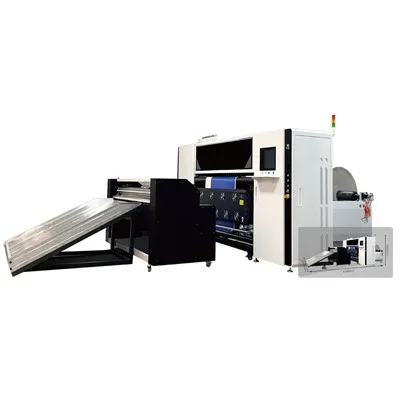
If you want to learn more about UV printing for waterproof applications, or compare printer models for roll-to-roll vinyl work, we’re here to guide you through every step. Let’s talk about your specific needs, whether you’re doing small decals or large-format banners, and find the setup that works for your business.
UV Roll To Roll Printer References
- “UV Ink Curing Technology for Large-Format Printing”, International Journal of Printing Science and Technology, 2021
- “Waterproof Vinyl Materials: Composition and Adhesion Properties”, Journal of Adhesion Science and Technology, 2019
- “Durability of UV-Cured Prints on Flexible Substrates for Outdoor Applications”, Printing Quarterly, 2022
Hangzhou Yulan Technology Co., Ltd.
Hangzhou Yulan Technology Co., Ltd. is one of the most professional uv roll to roll printer manufacturers and suppliers in China. With abundant experience, we warmly welcome you to wholesale the newest uv roll to roll printer in stock here from our factory. Good service and quality products are available.
Address: 3rd Floor, Building 4, Kechuang Park, No. 43 Wuzhou Road, Donghu Sub-district, Linping District, Hangzhou,CHINA
E-mail: ulinprint@gmail.com
WebSite: https://www.ulinprinter.com/
