Hey there, fellow tow vehicle owners and hauling pros! If you’ve ever hauled a trailer at night, only to glance in your rearview and realize your wireless tow light bar is giving you the fade, you’re not alone. As someone who’s been in the wireless tow light bar game for years—helping folks like you get reliable visibility on the road—this is one of the most common headaches we troubleshoot every single week. Today, I’m breaking down why your signal might be weak, no fancy tech jargon, just real-world stuff that matters when you’re hauling heavy stuff down the highway. Wireless Tow Light Bar

First off, let’s get one thing straight: wireless doesn’t mean “no signal at all.” It’s still a radio-based system, right? Most of the wireless tow light bars we supply run on either 2.4 GHz or 5.8 GHz frequencies—super common for short-range wireless gear, but those bands have their own quirks. Think of it like walking and talking on a walkie-talkie: if something’s in the way, the signal drops. But let’s go deeper than that, because it’s not just random.
Number one big culprit: distance. Wait, I know what you’re thinking—“My bar is only 10 feet from my tow vehicle, that’s not far!” But here’s the thing: the average wireless tow light bar is designed for up to like 50 feet of range, but that’s in perfect conditions. No obstacles, no other wireless stuff hogging the airwaves. Once you start hauling a trailer that’s 20, 30, even 40 feet back, that distance starts eating into your signal. I had a guy last month hauling a 30-foot boat trailer—his bar was set to the max range, so by the time he hit 35 feet, the signal started flickering on his brake lights. That’s not a defect, that’s just how radio waves work. The further apart the transmitter (on your tow vehicle) and the receiver (on the light bar) are, the weaker the signal gets. Simple as that.
Second, physical obstructions between the two units. This is the one I see all the time, and it’s so easy to miss. When you mount your tow light bar, where are you putting it? If your trailer has a metal frame—thick steel rails, aluminum I-beams, even that big spare tire mount on the back of your toy hauler—metal blocks radio signals like crazy. 2.4 GHz waves can’t punch through dense metal worth a damn. I had another customer who mounted his light bar to the back of a utility trailer with a full metal cage; the signal was so weak his turn signals only worked half the time. Move the bar an inch or two away from the metal frame, and suddenly it’s crystal clear. Even plastic isn’t totally inert—if you’ve got a trailer loaded up with stuff like plastic totes, rubber mats, even that big toolbox you forgot to empty, that can slow the signal down a bit, too. It’s not a hard block like metal, but it’s like putting a blanket over your Wi-Fi router—you still get signal, just not as strong.
Third, other wireless devices cluttering the airwaves. Let’s be real, modern hauling doesn’t happen in a vacuum. Your tow vehicle probably has a Wi-Fi hotspot, a Bluetooth connection to your phone, maybe even a wireless backup camera. Most of these run on that same 2.4 GHz band that a lot of our wireless tow light bars use. When all that stuff is chattering away at the same frequency, it causes interference. It’s like being in a crowded room where everyone’s talking at once—you can’t hear the person right next to you. Last month, a guy brought his bar back saying the brake light signal was weak, only to realize his new phone was paired to his tow vehicle’s infotainment and hogging half the 2.4 GHz bandwidth. We switched his bar to the 5.8 GHz band (it’s a setting most folks don’t even know exists!) and suddenly it was perfect. 5.8 GHz is less crowded, but it doesn’t go as far—so you pick your poison, but interference is a big one.
Fourth, maybe it’s not the bar itself, but your tow vehicle’s transmitter setup. Wait, a lot of people forget that the transmitter isn’t just built into every wireless tow light bar package? No, wait—wait, no, our systems come with a transmitter you mount on the front of your trailer tongue, right? Wait, no, actually, no—let me clarify for new folks: when you buy a wireless tow light bar from us, it’s a two-part system: the light bar itself (the receiver unit that mounts on the back of your trailer) and the transmitter unit that you mount on the front of your tow vehicle, right near the hitch. If that transmitter is mounted wrong—like behind your tow vehicle’s metal bumper, or blocked by a bike rack or a cargo carrier you have on the back of your SUV—then it’s not sending a strong signal to the light bar. I had a guy who mounted his transmitter behind his truck’s aftermarket roll bar, and he wondered why his signal was garbage. Move that transmitter out into the open, not hidden behind metal or junk, and boom—signal strength jumps. Also, check the batteries? Wait, yeah, the transmitter needs power, usually from the tow vehicle’s 12V port, right? If that port is loose, or corroded, it’s not sending enough power to the transmitter, so it can’t put out a strong signal. That’s a super easy fix—just wiggle the port, check for corrosion with a wire brush, and you’re good.
Wait, another thing: weather. I know, it’s not the first thing you think of when signal gets weak, but wet weather does weird stuff to radio waves. When it’s raining hard, or snowing, even foggy, the moisture in the air absorbs some of that 2.4 and 5.8 GHz signals. It’s like how your phone might have worse reception in the rain—same idea. I’ve had customers tell me their bar works great on dry days but flickers when it’s pouring, and that’s normal. It’s not a defect, it’s just atmospheric interference. The good news is, once the weather clears, the signal goes right back to normal.
Now, let’s talk about what’s not usually the problem: the light bar itself. 9 times out of 10, when a customer brings a bar back saying the signal is weak, it’s not the unit being broken. It’s one of the things I listed above: distance, obstructions, interference, transmitter placement. We’ve only had like 1 or 2 units come back with actual manufacturing issues in the last year, and those got replaced no questions asked, obviously. But the vast majority of weak signal issues are user-related, not product-related. That’s why it’s so important to know how your system works before you haul.
Wait, let’s give a quick real example. Last week, a guy reached out to our support line saying his brand new wireless tow light bar was garbage. He was hauling a 25-foot camper, mounted the bar to the back of the camper, transmitter on the hitch, and said the brake lights only worked when he pressed the pedal all the way to the floor. We walked him through checking the setup: first, he had the transmitter mounted behind a metal hitch cover, so we told him to remove that cover. Then, we had him switch the frequency from 2.4 GHz to 5.8 GHz, since his tow vehicle had a Wi-Fi hub that was using up 2.4 GHz. He tested it that weekend, and sent us a message saying it worked perfectly now. That’s the kind of thing we deal with every single day—simple tweaks that make all the difference.
So, what can you do if you’re dealing with a weak signal? Let’s make a quick checklist, easy to follow:
-
Check the distance: If your trailer is longer than 50 feet, that’s at the upper limit for most standard wireless bars. Some of our heavy-duty models go up to 100 feet, so if you haul extra long trailers, look into those.
-
Move both the transmitter and the light bar away from metal obstructions. No more hiding the transmitter behind bumper covers or roll bars, and mount the light bar as far from metal trailer frames as you can.
-
Check for interference: Turn off any other wireless devices on 2.4 GHz (your phone’s Bluetooth, vehicle Wi-Fi, wireless backup camera) temporarily and see if the signal gets better. If it does, switch your bar to the 5.8 GHz band, which is less crowded.
-
Make sure your transmitter is getting power: Check the 12V port on your tow vehicle, clean any corrosion, make sure the plug is tight. If your transmitter runs on batteries, replace those with fresh ones—old batteries put out less power, leading to weaker signals.
-
Don’t forget weather: Wet, snowy, or foggy days might cause temporary weak signal, that’s normal. If it persists after the weather clears, then go back to the checklist.
Now, if you’ve tried all that and your signal is still weak? That’s when you reach out to us. We’re not just a supplier—we’re people who haul stuff too, so we get it. We can help you troubleshoot over the phone, send replacement parts if needed, or even point you toward a heavy-duty model if your setup is extra big.
Wait, let’s make sure this doesn’t sound like a sales pitch, but it is, right? I run the wireless tow light bar side of things, so I want folks to get the right setup. The key thing is not to assume your bar is broken right away—most of the time, it’s a quick fix. That’s why we include a quick setup guide with every bar, so you can go through this checklist yourself before contacting support.
Another common mistake: people mounting the light bar too low. If it’s near the ground, mud, snow, or road spray can get in the way of the signal too? Wait, yeah—if the light bar is sitting 6 inches off the ground, the road spray is between it and the transmitter, absorbing the signal. Mount it at least 12 inches off the ground, so road spray doesn’t hit the back of it, and it’s not blocked by stuff on the ground. That’s another little trick I learned early on.
Let’s also bust a myth here: some people think that all wireless tow light bars are the same, so if one has a weak signal, all do. Not true. The quality of the transmitter and receiver chips matters a lot. The ones we use have higher gain antennas, which pick up weaker signals and send stronger ones. Cheap off-brand bars might use lower quality chips, so their range is worse and they’re more prone to interference. That’s why when you’re shopping for a wireless tow light bar, it’s worth going with a reputable supplier who knows their stuff, not just the cheapest one on Amazon.
Wait, I remember a guy who bought a super cheap bar online, brought it to us, and said his signal cut out every time he went over 20 feet. We tested it, and sure enough, their antennas were tiny, their transmitter put out half the power ours do. So even if you follow all the setup tips, a cheaply made bar will still have weak signal because of the hardware. That’s why we stand behind our products—we use quality components so our customers don’t have to deal with that extra hassle.
So, to wrap this up, weak signal on your wireless tow light bar is almost never a mystery. It’s either distance, obstructions, interference, bad transmitter power, or sometimes a low-quality unit. Most of the time, it’s a simple fix that takes 5 minutes. If you’ve tried everything and you’re still having issues, we’re here to help. We don’t do fancy automated support lines—you call or email us, and you talk to someone who actually uses these bars, who has hauled their own trailers at night, who knows exactly what you’re going through.
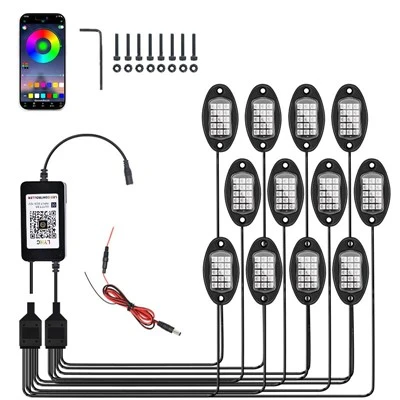
If you’re in the market for a new wireless tow light bar, or you want to upgrade the one you have to get a stronger signal, we’ve got options for every haul. Whether you’re towing a small utility trailer, a big camper, or a work trailer full of gear, we can hook you up with the right setup. Just reach out to us to talk through your needs, no pressure, no hard sell.
Wireless Tow Light Bar References:
- IEEE 802.11: Wireless LAN Medium Access Control (MAC) and Physical Layer (PHY) Specifications, for frequency band usage and signal propagation.
- Federal Communications Commission (FCC) Guidelines for Unlicensed Wireless Devices, for power output limits on 2.4 GHz and 5.8 GHz bands.
- SAE International J2807: Performance Requirements for Trailer Lighting Systems, for visibility and signal reliability standards for towed vehicle lighting.
Shenzhen Idun Photoelectric Technology Co., Ltd.
As one of the most professional wireless tow light bar manufacturers and suppliers in China, we have world-leading production equipment and strong manufacturing capabilities. Please feel free to wholesale customized wireless tow light bar at competitive price from our factory. Contact us for more cheap products.
Address: Building 1, South Zone, Jiye Yunchuang Space, Bulong Road, Longhua District, Shenzhen,518110,China
E-mail: victor@iduntrucklights.com
WebSite: https://www.iduntrucklights.com/
