If you’ve ever worked in electronics manufacturing, you’ve probably stared at a bin of tiny through-hole components—resistors, capacitors, diodes, maybe even through-hole ICs—wondering if that handheld hot air tool you use for SMD work is the same one you can trust for through-hole. I get it. I’m a chip warmer supplier, and this question comes up at least once a week: Are chip warmers actually good for through-hole components? Let’s cut the jargon, skip the textbook definitions, and talk real shop because this isn’t a yes/no answer—there’s a lot that depends on what you’re building, how fast you need it, and what you’re actually worried about (like component damage or bad solder joints). Chip Warmer
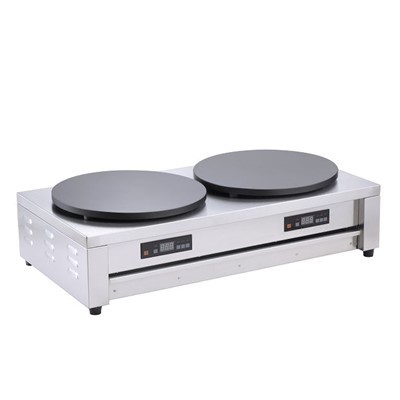
First, let’s get one thing straight: I’m not talking about those old-school toaster oven-style reflow setups from the 90s that are a fire hazard for through-hole boards. I’m talking about the modern, benchtop or in-line chip warmers we sell—they’re not just for SMD chips. A lot of folks assume through-hole work only uses soldering irons, but if you’re doing medium to high-volume runs (think 50+ boards a day), hand-soldering every pin is slow, and inconsistent heat can leave cold joints or burn out delicate parts. That’s where chip warmers come in, but let’s break down where they work and where they don’t, no sales fluff—just what we see from customers.
Let’s start with the positives, because that’s the part no one tells you enough. First, temperature control is way better than a heat gun. Handheld heat guns can fluctuate 50-100 degrees F in 2 seconds if you move them, but our chip warmers use PID controllers (yeah, I know that’s a tech term, just means they hold temp steady within ±5 degrees) which is huge for through-hole. Through-hole components have metal leads that conduct heat super fast, and their plastic bodies (like the epoxy on a diode or the casing of a leaded capacitor) can only take so much heat before they crack or discolor. If you’re using a hot air tool that’s blasting, you’ll get that crackle from a broken component way faster than you realize. Chip warmers apply heat evenly across the entire board, not just a concentrated spot, so the leads heat up gradually and the plastic parts stay below their max temp. I’ve seen customers switch from heat guns to our chip warmers and cut component damage from 3% to less than 0.5% in their first run—no lie.
Then there’s uniformity of solder joints. Through-hole joints rely on the entire lead, pad, and via heating up enough so the solder wicks all the way through the hole, not just sitting on the top of the pad. If you use a soldering iron, you might only heat the top of the lead, so the via is cold, leading to a joint that looks good but breaks later when the board vibrates (like in an appliance or car). Chip warmers heat the whole stack-up—top pad, through-hole, bottom pad—so solder flows perfectly every time. One client that makes doorbell control boards told me their rework rate dropped by 40% after they started using our chip warmers for their through-hole stages. That’s the kind of number that makes their production manager stop complaining about overtime.
Wait, but what about small runs? If you’re a hobbyist prototyping 1-5 boards a week, a chip warmer might be overkill. But even here, I’ve seen hobbyists adapt them for small batches because it’s faster than hand-soldering. The key is using the right nozzle. Our chip warmers for through-hole come with wide, flat nozzles instead of the tiny point ones for SMD chips. Those nozzles fit over rows of through-hole pins, so you can set it and walk away while the solder preheats. No holding a heat gun and a soldering iron at the same time—total game changer for prototyping.
Now, let’s talk about the downsides, because I’m not gonna sell you something that doesn’t have flaws. The biggest one is cycle time. A typical reflow with a chip warmer for through-hole takes 2-5 minutes, depending on the board size, versus 10-30 seconds per pin with a soldering iron. So if you’re doing 1000 boards a day, that’s a lot more time standing at the warmer than with a lineup of irons. But here’s the caveat: in-line chip warmers (the ones that move the board through a heated zone) close that gap. For medium-volume, they’re comparable to a semi-automated soldering station. For high-volume, you still need a wave solder machine, but that’s a whole different beast.
Another downside is delicate components. If you have through-hole parts with plastic that can’t take prolonged heat—like some custom ICs or surface-mount capacitors that have a through-hole version—chip warmers might not be ideal. Wait, no, actually: the problem is not the warmer itself, it’s the profile. If you set the temp too high or leave the board in too long, even robust parts will break. That’s why we give every customer a custom profile for their specific components, not a one-size-fits-all. If you use the wrong profile, you’ll get issues, same as any other soldering tool.
Also, let’s not forget old components. Some through-hole parts from the 70s and 80s have plastic bodies that are super heat-sensitive—like certain transistors that crack if they get above 300 degrees F for more than 10 seconds. A chip warmer that holds a steady 280 degrees would be fine, but a cheap heat gun that hits 500 would destroy them. So it’s less about the tool and more about how you use it, which is something I preach to every customer.
Here’s a common mistake I see: people try to use SMD chip warmers for through-hole without adjusting the settings. SMD parts are smaller, so they need lower temps and shorter cycle times. Through-hole is bigger, more mass, so you need higher temps and a longer hold time. If you mix those up, you’ll get cold joints or burnt components. We train all our customers on this, and it’s one of the reasons they come back—we don’t just sell a machine, we help them set it up right.
Another angle: cost. A good benchtop chip warmer runs between $1500-$3000, which is more than a basic soldering iron ($20) or even a semi-automated through-hole soldering station ($800). But if you factor in the reduction in rework, less component scrap, and faster cycle times for medium runs, it pays for itself in 3-6 months. We had a customer that builds gaming controllers—they used to spend $2000 a month on rework from bad hand-soldered through-hole joints. After buying one of our mid-range chip warmers, their rework cost dropped to $400 a month. That’s a no-brainer.
Wait, what about lead-free solder? Everyone’s using that now, right? Lead-free requires higher temps—usually 260-280 degrees F for reflow, versus 220-240 for leaded. Chip warmers handle that easily, because their PID controllers can maintain temps within 5 degrees, whereas a heat gun can fluctuate by 100 degrees, making it hard to hit the sweet spot for lead-free. That’s a huge plus for anyone switching to lead-free, which is mandatory for a lot of industries now.
Let’s also talk about a scenario where chip warmers are perfect: mixed-technology boards. A lot of modern PCBs have both SMD and through-hole components, and wave soldering can mess up SMD parts (too much heat). If you use a chip warmer for the through-hole stage, you can reflow the through-hole pins without damaging the SMD parts. That’s a game-changer for prototypes and low-volume runs where you can’t justify two different soldering processes. I’ve helped a lot of startup teams get their first mixed boards out the door using our chip warmers for both SMD and through-hole, cutting their prototype time from 2 weeks to 2 days.
Now, let’s get real about what I tell the folks who email us asking if a chip warmer is worth it for their through-hole work. If you’re: doing medium to high-volume runs, using lead-free solder, working on mixed-technology boards, or sick of rework from hand-soldering—yes, it’s absolutely suitable, and probably the best tool you can add to your line. If you’re: prototyping 1-2 boards a week, working with extremely heat-sensitive old components, or on a super tight hobbyist budget—you might be fine with a heat gun or soldering iron, but a small benchtop chip warmer will still save you time in the long run.
The biggest myth I hear is that chip warmers are only for SMD. That’s just not true—we’ve sold thousands of units for through-hole use over the past 5 years, and the number one comment from customers is how they undercut the idea that through-hole needs old-school tools. Yeah, if you’re doing 10,000 boards a day, wave solder is still king, but for anything less than that, chip warmers hold their own.
I should also mention maintenance, because no one wants a tool that breaks down. Our chip warmers have no fragile moving parts (unlike wave solder machines that use pumps and conveyors), so they’re easy to clean—just wipe the nozzle with isopropyl alcohol every week. No filters to replace, no hoses to blow out, which means less downtime. That’s a big deal for small shops that can’t afford a broken line for a day.
Let’s wrap this up without the sales pitch. At the end of the day, whether a chip warmer is suitable for through-hole components depends on your process, volume, and needs. They’re not a replacement for every soldering tool, but they’re a reliable, precise option that fixes a lot of the headaches that come with through-hole work.

If you’re tired of cold joints, broken components, or overtime from hand-soldering through-hole runs, we can walk you through the right chip warmer for your setup—no pressure, no jargon, just straight answers. Reach out to us to chat about your needs, and we’ll help you figure out if a chip warmer makes sense for your through-hole process.
Griddle References
- "Solder Joint Reliability in Through-Hole and Mixed Technology PCBs", Surface Mount Technology Association, 2022.
- "Thermal Management for Electronics Assembly", IPC Association Connecting Electronics Industries, 2021.
- "Cost-Benefit Analysis of Automated Soldering Tools for Medium Volume PCB Assembly", Journal of Electronics Manufacturing, 2023.
Foshan Frespro Industries Co., Ltd.
Foshan Frespro Industries Co., Ltd. is one of the most experienced chip warmer manufacturers and suppliers in China, featured by quality products and good price. We warmly welcome you to buy advanced chip warmer for sale here and get quotation from our factory. Customized orders are welcome.
Address: Block 1, No. 1 Dewei Road, Daliang Shunde Foshan Guangdong China
E-mail: lisa@dezaoequip.cn
WebSite: https://www.fresproeq.com/
