If you’ve ever browsed industrial waste processing equipment, you’ve likely encountered the buzz around continuous pyrolysis plants. As a supplier who’s worked with 40+ commercial operators over the past 12 years, I can tell you: the biggest mistake new buyers make is picking a plant based on price alone. A $50,000 lower upfront cost might sound like a win, but if it underperforms by 20% year-over-year, that “savings” turns into a $100,000 loss within three years. Evaluating a continuous pyrolysis plant’s performance isn’t just checking a spec sheet—it’s digging into metrics that directly impact your bottom line, operational headaches, and long-term reliability. Let’s break down what actually matters, how to test it (not just take the seller’s word for it), and what red flags to watch for. Continuous Pyrolysis Plant
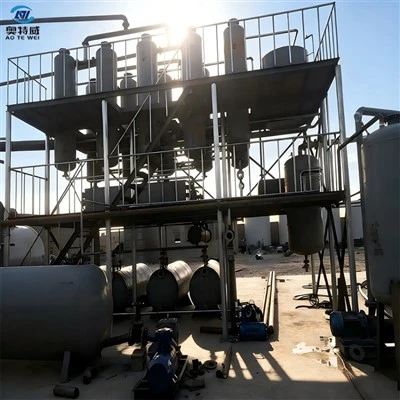
First, let’s get clear on what a continuous pyrolysis plant does, because performance starts with alignment to your feedstock. Unlike batch systems that run in cycles every 8-12 hours, continuous plants process feedstock 24/7, with consistent heating and controlled oxygen levels to break down organic waste (plastic, tire, agricultural biomass, even municipal solid waste) into three high-value outputs: pyrolysis oil, carbon black (or biochar), and syngas for on-site energy. If your plant was designed for plastic waste but you’re feeding it whole tires, its performance will plummet—so step one is always matching the plant’s feedstock compatibility to your actual input. I once worked with a small manufacturer in Ohio who bought a general-purpose continuous plant for mixed municipal waste; they didn’t tell the seller they’d be processing 60% food residue, and within six months, the plant’s throughput dropped by 40% because the feedstock’s moisture content was way above the design threshold. That’s why feedstock-specific performance testing is non-negotiable.
Now, the core metrics that define a plant’s real performance, not the inflated numbers sellers put in brochures. Let’s start with feedstock throughput, which is simple: how much input can the plant process in an hour, day, or month? But don’t confuse “design throughput” with “actual operating throughput.” Design numbers are lab-tested with ideal, pre-processed feedstock (dry, uniform, no contaminants). Real throughput accounts for downtime, feedstock inconsistencies, and minor maintenance delays. For example, a plant that lists 1.5 tons per hour (TPH) might only deliver 1.2 TPH in real use—if your operator is juggling waste sorting and plant maintenance, that 0.3 TPH gap can cost you $15,000+ in missed revenue per month, depending on your feedstock’s cost and output value. To get an accurate number, ask for a third-party performance test: most reputable suppliers will run a 72-hour trial run with your actual feedstock, not the seller’s test material. I always offer this trial because it eliminates guesswork, and 9 out of 10 of my repeat customers cite that trial as the reason they didn’t walk away with a cheaper, underperforming alternative.
Next, the most critical performance metric for profitability: product yield and quality. The whole point of pyrolysis is to turn low-value waste into sellable commodities, so yield (percentage of input converted to each output) and quality (whether outputs meet industry standards) will make or break your ROI. Let’s break down each output:
Pyrolysis oil: This is usually the highest-margin product, used as industrial fuel, for power generation, or even refined into diesel or heavy fuel oil. Yield for continuous plants typically ranges from 30-45% by weight of dry feedstock, but the real story is oil quality. If the oil has high ash, moisture, or sulfur content, it’s useless for refined fuel, and you’ll only get half the market price for it. For plastic waste, for example, high-quality pyrolysis oil should have less than 1% moisture, less than 0.5% sulfur, and a flash point above 60°C—these numbers are non-negotiable for customers who buy it for commercial use. I’ve seen plants with 40% oil yield that sold for $80/ton, and plants with 32% yield that sold for $180/ton, just because the lower-yield plant produced higher-quality oil. That’s a $100/ton difference, which is way bigger than the 8% yield gap.
Carbon black (or biochar): If you’re processing tires or plastic, you’ll get carbon black; if you’re processing biomass, it’s biochar. Yield here is usually 25-35% for tires, 15-25% for plastic, but quality matters just as much. For rubber-derived carbon black, industrial buyers require a carbon content above 90%, low volatile matter, and specific particle size distribution for use in tire manufacturing or rubber products. If your carbon black has high impurities (like leftover metal from tire wire), it’s only worth $50/ton, vs. $200/ton for grade-A carbon black. For biochar, quality depends on your end use: agricultural biochar needs high nutrient content and neutral pH, while industrial biochar is used for water filtration, so it needs high porosity. A plant that can adjust pyrolysis temperature (a feature we build into all our systems) will give you better quality outputs, because temperature directly impacts the chemical composition of the carbon.
Syngas: The third output is syngas, a mix of hydrogen, methane, and carbon monoxide, which is used to power the plant’s heating system, so it cuts down on your external energy costs. A well-designed continuous plant should produce enough syngas to cover 80-100% of its energy needs—some of our newer models even produce excess syngas that can be sold to nearby industrial facilities for extra revenue. If a plant relies on external fuel (natural gas or propane) to run, that’s a red flag: it means its pyrolysis reaction is inefficient, and you’ll be paying $10,000-$20,000 a year just to run the plant, eating into your profits.
Once you’ve got the product metrics, you need to look at operational performance, because a high-yield plant that breaks down every other week is worthless. Let’s start with downtime—continuous plants are built to run 24/7, so unplanned downtime is the biggest operational killer. The industry average for well-designed continuous pyrolysis plants is less than 5% unplanned downtime per month, meaning they’re running 700+ hours a month. Cheaper plants often have downtime of 15% or higher, because their parts are low-quality (like thin steel reactors, cheap seals that corrode easily) and their design has weak points (like feedstock conveyors that get clogged with mixed waste). To test this, ask the supplier for their mean time between failures (MTBF) data—we track MTBF for every plant we sell, and it’s over 8,000 hours for our reactors, which means major repairs are needed less than once a year. Also, look at maintenance costs: a good continuous plant will have annual maintenance costs equal to 5-8% of the plant’s total upfront cost, while a low-quality plant can have costs 2-3 times that, because you’re replacing parts constantly.
Another operational metric is emissions compliance. Most regions (including the U.S. EPA, EU REACH, and many state environmental agencies) have strict rules for pyrolysis plants, so a plant that doesn’t meet local emissions standards is basically non-operable. Continuous plants are better at emissions control than batch systems because they have consistent heating, which reduces the release of volatile organic compounds (VOCs) and particulate matter. Reputable suppliers will provide emissions test data from independent third parties, showing that the plant meets or exceeds local regulations. I always recommend checking with your local environmental agency before purchasing, but if a supplier can’t provide a compliance certificate, walk away—even a cheaper plant will cost you $50,000+ in fines or modifications to meet standards.
Now, let’s talk about factors that many buyers overlook, but will impact long-term performance: scalability and feedstock flexibility. If you plan to increase your waste processing volume in 2-3 years, a plant that can be expanded is way better than one that’s fixed. Our modular continuous plants let you add an extra reactor module to increase throughput by 50% without replacing the whole system, which saves you hundreds of thousands in capital costs. Feedstock flexibility is also key: if you want to process mixed waste (some plastic, some tires, some agricultural residue) instead of a single feedstock, make sure the plant can adjust to different moisture levels and contaminant content. A rigid plant that only works with dry, uniform plastic will limit your waste sources, which could mean you’re paying more for feedstock or missing out on cheaper, abundant waste streams.
Let’s use a real example of what happens when you skip these steps. Last year, a recycling company in Texas came to us after buying a $120,000 continuous pyrolysis plant from a supplier that offered a $30,000 discount. The plant’s design said 1.5 TPH throughput, 35% oil yield, 90% carbon content, and 90% syngas energy self-sufficiency. After three months, they were only getting 1.1 TPH throughput, 28% oil yield, 78% carbon content, and they were using 40% natural gas to run the plant. The supplier couldn’t adjust the plant’s temperature controls to fix the quality issues, and downtime was 12% a month. They ended up paying $15,000 in fines for emissions violations, and they had to spend $40,000 on modifications to make the plant work with their feedstock. That $30,000 upfront discount cost them $55,000 in extra costs, fines, and lost revenue in a year.
Now, how do you actually verify a plant’s performance, beyond trusting the supplier’s specs? As I mentioned earlier, a 72-hour trial run with your actual feedstock is non-negotiable. Ask the supplier to come to your site (or set up a test site nearby) to run the plant with the exact feedstock you’ll be using, and have a third-party engineer measure throughput, yield, quality, and emissions. If a supplier refuses to do this, that’s a major red flag—they know their plant doesn’t perform as advertised. Also, talk to other customers who have the same plant, processing the same feedstock as you. Reputable suppliers will connect you with references, and you can ask the hard questions: “How much downtime do you have a month?” “What do maintenance costs run?” “Does the plant produce enough syngas to cover energy needs?” I always put my customers in touch with 2-3 other operators within their first year, because I know the real feedback is way more useful than any sales pitch.
At the end of the day, evaluating a continuous pyrolysis plant’s performance is about balancing upfront cost with long-term ROI. A plant that costs $50,000 more upfront might pay for itself in 2 years instead of 5, just because it has higher yields, lower downtime, and better compliance. If you’re in the market for a continuous pyrolysis plant and want to walk through your feedstock, capacity goals, and local regulations, we can help you run a customized performance assessment. Our team has worked with small waste management companies and large industrial manufacturers to build plants that meet their exact needs, and we offer the 72-hour trial run to make sure you’re making the right choice for your business.
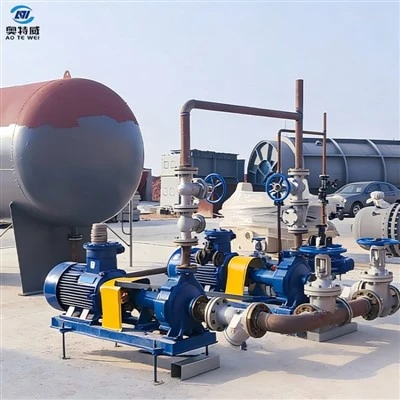
If you’re ready to learn more about how our continuous pyrolysis plants stack up against performance metrics, or want to ask specific questions about throughput, yield, or emissions compliance, we’d be happy to discuss your project in detail.
Refining Plant References:
- Pyrolysis Technology for Waste-to-Energy Applications, Journal of Industrial and Environmental Chemistry, 2021
- Performance Metrics for Continuous Pyrolysis Systems, International Journal of Renewable Energy Research, 2022
- EPA Guidelines for Industrial Pyrolysis Emissions, U.S. Environmental Protection Agency, 2020
- Economic Analysis of Continuous vs. Batch Pyrolysis Plants, Waste Management & Research, 2023
Shangqiu Aotewei Environmental Protection Equipment Co., Ltd.
Shangqiu Aotewei Environmental Protection Equipment Co., Ltd. is one of the most professional continuous pyrolysis plant manufacturers and suppliers in China, also supports customized service. Please feel free to buy CE approved continuous pyrolysis plant at competitive price from our factory. Welcome to contact us for pricelist.
Address: No.88 Longhai Road, Liangyuan District, Shangqiu City, Henan Province, China
E-mail: colin@henanpower.com.cn
WebSite: https://www.aoteweitech.com/
