If you’re running a blown film operation—especially with an ABA three layer machine—you know how much the blow-up ratio (BUR) can make or break your film’s quality. I’ve been supplying these machines for years, and I can’t tell you how many times shop floor folks come to me saying, “My film keeps tearing, or it’s too stretchy, or the thickness is all off—and I swear I set the BUR right.” The thing is, adjusting BUR isn’t just turning a dial; it’s a mix of knowing your machine, your resin, and what you’re actually trying to make. No two jobs are exactly the same, so I’m gonna walk you through what works for most ABA setups, straight from what my customers tell me actually gets results. ABA Three Layer Blown Film Machine
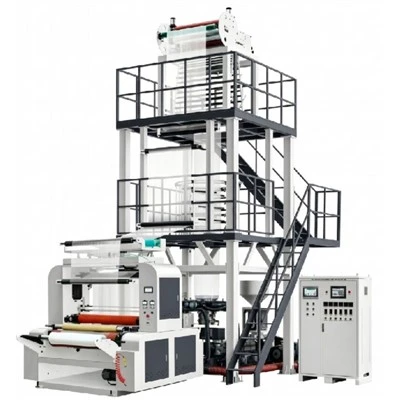
First, let’s keep it simple: what the heck is BUR anyway? For ABA three layer machines, you’re extruding three layers total—A layers are usually the tough stuff, like LDPE or LLDPE, and the middle B layer is often something more flexible, maybe metallocene PE. The blow-up ratio is basically how much you stretch the melted tube of resin as it comes out of the die, compared to the die’s diameter. Calculating it is easy: just divide the final film’s bubble diameter (that’s the round tube you get right after the die, before you flatten it into film) by the die’s diameter. For most ABA jobs, BUR ranges from 2:1 to 4:1, but that’s not a hard rule.
I see a lot of new operators jump in and crank the BUR too high right away, and that’s where the problems start. Let’s say you’re making a grocery bag—you want it strong enough to hold a dozen apples, not stretch so much it tears when you fold it. If you set BUR to 4.5:1 on LDPE, you might get a super thin film that rips at the heat seal, or the layers might even delaminate because you stretched them too far. On the flip side, if BUR is too low, your film will be stiff, maybe uneven, and you’re wasting resin because you could have stretched it a little more without sacrificing quality.
So how do you actually adjust it? Let’s break it down step by step, like you’re working on your machine right now.
First, prep your machine and your resin. ABA machines have different zones—you gotta make sure each layer is at the right temp before you touch BUR. The A layers (the outer ones) usually run a little cooler than the middle B layer, because LLDPE melts hotter and needs to stay fluid to stick. If your resin is too cold, it’s stiff and won’t stretch evenly; too hot, it sags, which messes up the bubble. I tell customers to let the machine warm up for at least 30 minutes before making any changes, and do a test run with a small batch of the exact resin you’re using—no switching on the fly mid-job. Resin type is huge here: metallocene PE stretches way better than regular LDPE, so you can push BUR a little higher with metallocene, but you have to slow down the haul-off speed (that’s the rollers pulling the film after the bubble) to keep the thickness consistent.
Next, the main way to adjust BUR is your air valve. On almost every ABA machine, you control the bubble’s size by how much air you let in through the die’s air ring. If you open the air valve wider, more air fills the bubble, so the diameter gets bigger—higher BUR. If you close it, the bubble shrinks—lower BUR. But here’s a trick no one tells you: don’t just adjust the valve blindly. Stand by the bubble, not just looking at the gauge. Watch if the bubble is swaying left and right—that’s “bubble instability,” which means you’re changing air too fast. Swaying makes the film thickness uneven, so you’ll have to pause, adjust the valve a tiny turn (like a quarter turn, not a full one), wait 2 minutes for the bubble to settle, then check again. I’ve had operators crank the valve 3 turns and wonder why the film is all wavy—small, slow adjustments are key.
Then there’s the haul-off speed. Wait, how does that tie into BUR? Let’s do quick math: if your die is 100mm, target BUR is 3:1, so bubble diameter should be 300mm. The haul-off is pulling the flattened film—so if the haul-off is too fast, you’re stretching the resin lengthwise, which lowers the BUR. If it’s too slow, the resin piles up, and the bubble gets bigger, raising BUR. So once you set the air valve for your target bubble size, tweak the haul-off speed in tiny increments. For example, if your bubble is 290mm and you want 300mm, slow the haul-off by 5 feet per minute (FPM), wait a minute, check the bubble again. Don’t adjust both air and haul-off at the same time—you’ll confuse the machine. Pick one first, get it right, then adjust the other if you need to.
Now, layer thickness matters more than you think with ABA machines. The middle B layer is usually the thinnest, right? If you’re running BUR too high, that middle layer is the first to thin out, which can cause delamination. A customer last month was making stretch wrap with a 1:1:1 layer ratio (A:B:A), and they kept having the middle layer peel off. We checked their BUR—they had it at 4.2:1, which is too high for that ratio. We dropped BUR to 3.5:1, slowed the haul-off by 10 FPM, and the delamination stopped. Why? Because the middle layer didn’t get stretched beyond its melt strength. If your middle layer is thicker, you can go higher on BUR, but if it’s thinner, keep it lower. I always tell operators to do a thickness check with a micrometer once every 10 minutes when adjusting BUR—don’t just rely on the machine’s gauge, numbers can lie.
Common mistakes I see all the time: First, ignoring the cooling ring. The air ring around the die cools the bubble, so if it’s not blowing evenly, one side of the bubble is cooler than the other, so one side stretches more. That messes up BUR consistency. Clean the air ring’s nozzles once a week—little bits of resin get stuck in there and block air flow. Second, rushing the test run. A lot of guys make a 5-minute test, see a little stretch, and crank BUR up. Wait at least 10 minutes—some resins take time to adjust to new settings, especially metallocene ones. Third, not accounting for film end use. If you’re making a heavy-duty bag, BUR 3:1 is perfect—strong, not too stretchy. If you’re making a grocery store produce bag, you can push BUR to 3.8:1 because you need it to stretch over the fruit without tearing. If you’re making shrink film, BUR 2.5:1 is better, because higher BUR would make the shrink too extreme.
Wait, what about when you switch resin mid-job? That’s a big one. If you were running LDPE and switch to LLDPE, BUR will change automatically because LLDPE has a higher melt strength. You’ll have to open the air valve a little, or slow the haul-off, to keep BUR the same. I had a customer do that last week—they switched resin without adjusting BUR, and the bubble shrank so much the film was too thick. They ended up wasting 200 pounds of resin before they figured it out. So always reset BUR when you switch resin types.
Another thing: tower height. The distance from the die to the haul-off rollers is the tower height. If the tower is too short, the bubble doesn’t have enough time to cool, so it sags, which makes BUR inconsistent. If it’s too tall, the bubble can sway more. Most ABA machines have a tower height between 3 and 5 meters—if yours is outside that, you might have to adjust BUR a little. For example, a shorter tower means you need a lower BUR, because you can’t cool the bubble fast enough if you stretch it too much.
Let me give you a real example from a regular customer of mine. They run a ABA three layer machine making bread bags. Their old setup was BUR 3:1, air valve at 5 turns open, haul-off at 150 FPM, and they had a 8% defect rate from tearing. We adjusted BUR to 3.2:1, opened the air valve half a turn, slowed the haul-off to 140 FPM, and cleaned the air ring. Now their defect rate is 2% and they’re using 5% less resin because the film is more uniform. That’s the kind of small adjustment that adds up to big savings.
Now, when should you NOT adjust BUR? Let’s say your problem is thickness variation, and it’s happening in the haul-off, not the bubble. That’s not a BUR issue—that’s a roller alignment problem. Or if your film is tearing at the edges, that’s probably the die gap, not BUR. I always tell customers to narrow down the problem first: is the bubble uneven? If yes, BUR adjustment. If the flat film is uneven, that’s a different fix.
Finally, once you get your BUR set, lock it in, but check it every hour. Over time, resin can get old, the die can wear, or the air ring can get clogged, so BUR can shift. A quick check with a tape measure (measure the bubble’s diameter, divide by die diameter) takes 30 seconds and can save you from a whole run of bad film.
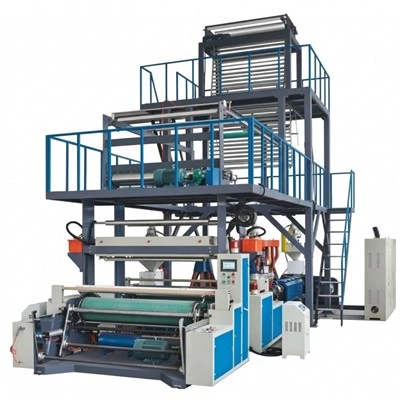
If you’re still struggling with adjusting BUR, or your ABA machine keeps giving you headaches, hit us up. We work with all kinds of blown film operations, from small shops to big factories, and we can help you dial in your settings so your film is consistent, less waste, and runs smoother. We’re not here to just sell you a machine—we’re here to make sure you can use it right.
Bag Making Machine References:
- Harper, C. A. (2016). Handbook of Plastics, Elastomers, and Composites. McGraw-Hill.
- Blown Film Extrusion Guide: Best Practices for Layered Films. Society of Plastics Engineers, 2021.
- Practical Troubleshooting for ABA Three Layer Blown Film Lines. Polymer Processing Journal, 2022.
- Resin-Specific BUR Adjustments for LDPE, LLDPE, and Metallocene PE. Plastics Technology Magazine, 2020.
Ruian Jianhao Precision Machinery Co., Ltd.
As one of the most professional aba three layer blown film machine manufacturers and suppliers in China, we’re featured by quality products and good price. Please rest assured to wholesale durable aba three layer blown film machine for sale here from our factory. Welcome to contact us for customized service and quotation.
Address: No. 8, Jianshe Road, Beiyu Village, Shangwang Street, Ruian City, Wenzhou City, Zhejiang Province
E-mail: 1832333027@qq.com
WebSite: https://www.jianhaomachinery.com/
