Hey there! I’m a guy working for a fiber management supplier. You might be wondering, "How does fiber management contribute to network resilience?" Well, let me break it down for you. Fiber Management

First off, let’s talk about what network resilience is. It’s all about how well a network can keep going when things go wrong. Whether it’s a natural disaster, a hardware failure, or a cyber – attack, a resilient network can bounce back and keep providing services. And that’s where fiber management comes in.
One of the key aspects of fiber management is cable organization. You see, in a big network, there are tons of fiber cables. If they’re all jumbled up, it’s a nightmare to find and fix problems. But when we manage these cables properly, we can easily trace them, identify issues, and make repairs quickly.
Let’s say there’s a cut in a fiber cable. If the cables are well – organized, our technicians can quickly locate the damaged section. They can then splice the cable back together, minimizing the downtime. On the other hand, if the cables are a mess, it could take hours or even days to find the problem, and that’s a huge hit to the network’s resilience.
Another important part of fiber management is documentation. We keep detailed records of all the fiber connections, including where they start, where they end, and what kind of equipment they’re connected to. This documentation is like a map of the network. When something goes wrong, our team can refer to it to understand the layout and figure out the best way to fix the issue.
For example, if there’s a sudden drop in network speed, we can look at the documentation to see which cables are involved. Maybe there’s a problem with a particular connection point, and we can quickly send a technician to check it out. Without proper documentation, it would be like searching for a needle in a haystack.
Fiber management also involves regular maintenance. We perform routine checks on the fiber cables and related equipment. This helps us catch small problems before they turn into big ones. For instance, we might notice that a cable is starting to wear out. By replacing it early, we can prevent a complete failure that could disrupt the network.
We also test the performance of the fiber network regularly. This includes checking the signal strength, latency, and bandwidth. If we detect any issues, we can take steps to optimize the network. For example, if the signal strength is low in a certain area, we can add amplifiers or adjust the cable routing to improve it.
Now, let’s talk about how fiber management helps with network security, which is a crucial part of network resilience. We implement security measures at every level of the fiber network. This includes protecting the physical cables from damage and unauthorized access. We use things like locked cabinets and security cameras to keep the cables safe.
In addition, we encrypt the data that travels through the fiber cables. This ensures that even if someone manages to tap into the network, they won’t be able to read the data. By protecting the network from cyber – attacks, we’re making it more resilient.
Another benefit of fiber management is scalability. As a business grows, its network needs to grow too. With proper fiber management, we can easily add new cables and equipment to the network. This means that the network can adapt to changing demands without major disruptions.
For example, if a company decides to open a new branch, we can quickly extend the fiber network to that location. We can also upgrade the network to handle more traffic as the business expands. This ability to scale is essential for maintaining network resilience in the long run.
Let’s take a real – world example. There was a large data center that was experiencing frequent network outages. The cables were all over the place, and there was no proper documentation. When an issue occurred, it took a long time to find and fix it. After we came in and implemented a fiber management system, things changed. We organized the cables, created detailed documentation, and set up a regular maintenance schedule. As a result, the network outages decreased significantly, and the data center became much more resilient.
So, in conclusion, fiber management plays a vital role in network resilience. It helps with cable organization, documentation, maintenance, security, and scalability. By ensuring that the fiber network is well – managed, we can keep it running smoothly even when faced with challenges.
If you’re looking to improve the resilience of your network, we’re here to help. Our team of experts has years of experience in fiber management. We can assess your current network, identify areas for improvement, and implement a customized fiber management solution. Whether you’re a small business or a large enterprise, we have the skills and resources to meet your needs.
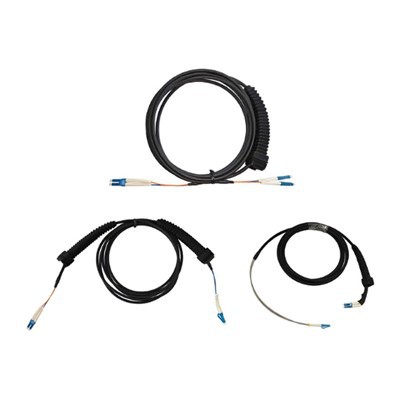
If you’re interested in learning more about how our fiber management services can benefit your network, don’t hesitate to reach out. We’d love to have a chat with you and discuss how we can work together to make your network more resilient.
Fiber Optic Connector References:
- Networking Basics by Cisco Press
- Fiber Optics Installation and Maintenance Handbook
Brolink Technologies (Dongguan) Co., Ltd.
As one of the most experienced fiber management manufacturers and suppliers in China, we offer a wide range of products with superior quality. We warmly welcome you to buy high-grade fiber management in stock here and get quotation from our factory. For price consultation, contact us.
Address: Room 201, Unit 2, Building 16, 77 Dongguan Science And Technology Park, Shilong Road, Guanlong Road, Dongcheng District,Guangdong province,China
E-mail: scwang@brolinktech.com
WebSite: https://www.brolinkopt.com/
